

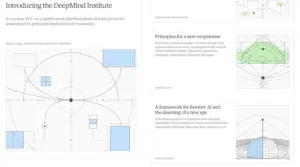



Google DeepMind launched the DeepMind Institute on Sept. 16, 2026, establishing a public research platform to study and debate the societal, economic, and safety implications of artificial general intelligence.
Key points
- Google DeepMind launched the DeepMind Institute to publish open research on artificial general intelligence safety.
- The initiative is co-directed by Shane Legg, Sir Demis Hassabis, and James Manyika.
- Chief AGI Scientist Shane Legg reaffirmed a 50 percent probability of reaching minimal AGI by 2028.
- Inaugural research evaluates economic buffers like Universal Basic Capital and safeguards against catastrophic biothreats.
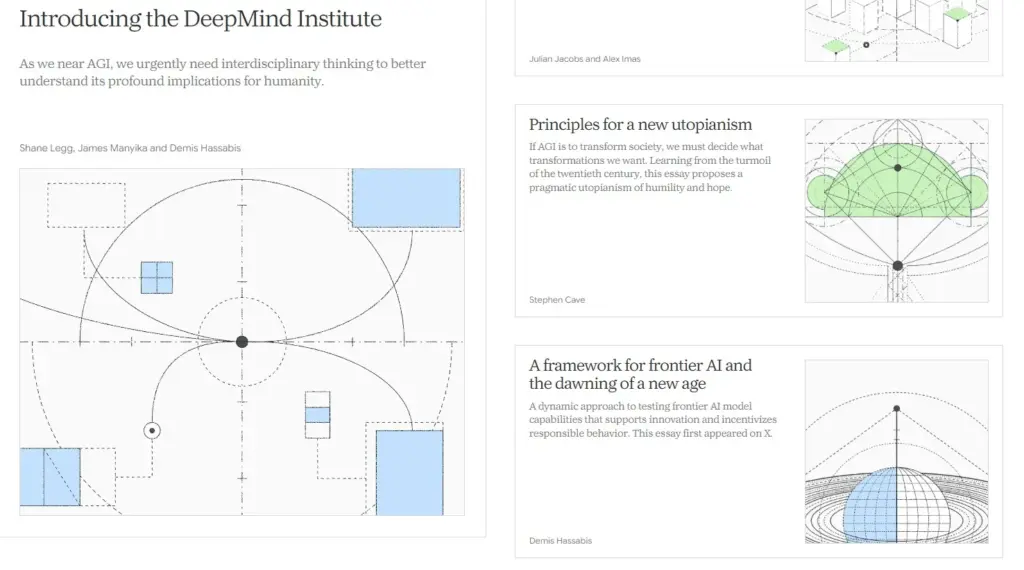
The platform serves as an open forum for computer scientists, economists, and policy researchers as advanced machine learning systems approach human-level capabilities across software development, scientific research, and reasoning tasks. The lab confirmed that published papers will reflect individual author perspectives rather than official corporate policy, allowing external researchers to disagree openly with Alphabet leadership.
Leadership and Editorial Structure
Three senior executives direct the DeepMind Institute. Shane Legg, co-founder and Chief AGI Scientist at Google DeepMind, acts as the institute’s managing editor. He is joined by Sir Demis Hassabis, co-founder and chair of DeepMind and Chief Scientist at Alphabet, alongside James Manyika, Google’s president of research, labs, technology, and society.
In their joint launch statement, the directors noted that human society faces a pivotal window to prepare technical and economic safeguards before superintelligent models arrive. The platform operates alongside broader Alphabet research initiatives, including consumer software deployment across Android systems and recent updates to Google Pixel devices.
Safety Frameworks and AGI Timelines
The institute debuts amid sharp industry disagreements regarding how quickly artificial general intelligence will emerge. Competitors such as OpenAI and Nvidia have recently asserted that AGI capabilities are imminent or already present in advanced frontier systems. Legg rejected those claims as premature, reaffirming his long-standing estimate of a 50 percent probability of achieving minimal AGI by 2028.
Speaking to the Financial Times, Legg stated that technical safety mechanisms must maintain parity with raw compute growth. He also described Anthropic chief executive Dario Amodei’s recent proposal to slow frontier model deployments as an idea worth considering. The institute’s safety mandate focuses on several critical hazards according to Google DeepMind documentation:
- Catastrophic cybersecurity exploits generated autonomously by recursive software.
- Biological synthesis hazards and weaponization vectors created through automated lab agents.
- Irreversible loss of control over self-improving algorithmic architectures.
- Model interpretability and reasoning verification failures.
These priorities follow recent personnel departures from the lab, where former safety researchers such as Bilal Chughtai and Josh Engels publicly raised alarms about the pace of commercial AI development. Similar concerns over infrastructure safety accompany commercial integrations, such as consumer transaction features being tested by Google for mobile services.
Economic Disruption and Universal Basic Capital
Beyond technical guardrails, the institute’s inaugural publications focus heavily on labor displacement. A debut research paper by DeepMind economists Julian Jacobs and Alex Imas examined 11 distinct policy frameworks designed to cushion job markets against high-capability automation.
To test these models, the researchers utilized literature reviews, public surveys, and 51 algorithmic evaluators calibrated using real-world economist survey data. Their findings argue that traditional Universal Basic Income programs remain too expensive and broad to address concentrated labor shocks. Instead, the authors advocated for Universal Basic Capital, a model where governments distribute direct ownership equity in productive physical and technological assets to citizens.
Additional debut essays examine model reasoning transparency by researchers Rohin Shah and Anca Dragan, alongside international governance frameworks. Rapid advances across consumer tools, including speech models released by Google earlier this year, demonstrate how quickly multimodal tools are entering public use.
Manyika reiterated that because frontier model development relies on global computing networks, governance cannot function effectively on an isolated, country-by-country basis. The DeepMind Institute plans to accept ongoing submissions from academic institutions and non-governmental policy bodies throughout the coming year.