
Rooting isn’t what it was a few years ago. SuperSU and Titanium Backup are long gone, Magisk now shares the stage with kernel-based root such as KernelSU and APatch, and keeping banking apps happy takes more than flipping one switch. What hasn’t changed is the reward: full control over a phone you own. This is our list of the best root apps for Android in 2026, rebuilt for today’s phones and Android versions.
Every app here was checked in October 2026. Each one is still maintained, still available from its official source and still worth installing on a rooted phone. We grouped the 47 picks by what they do, so you can jump straight to root managers, backups, ad blocking, kernel tools or customization.
What changed in this update (October 17, 2026)
- Removed apps that are abandoned, gone from Google Play or broken on modern Android, including SuperSU, Titanium Backup, Greenify, ROM Toolbox, GravityBox, DriveDroid and Servicely.
- Dropped Lucky Patcher and game-hacking tools. They exist to get around paid features, and fake copies are a common way to spread malware.
- Added the tools that define rooting in 2026: KernelSU Next, APatch, SukiSU Ultra, Zygisk Next, the maintained LSPosed fork, Play Integrity Fork, Tricky Store, MMRL, bindhosts and more.
- Every app now links straight to Google Play, F-Droid or its official GitHub page.
Before you start
Root apps need a rooted phone, and getting there takes a few decisions. Keep these in mind:
- Unlocking the bootloader wipes your phone. Almost every phone needs an unlocked bootloader before it can be rooted, so back up your data first.
- Some brands make it permanent. On Samsung phones, unlocking trips Knox for good: Samsung Wallet and Samsung Pass stop working even if you relock later.
- Banking apps may complain. With the right modules, most rooted phones pass Google’s basic and device integrity checks, but apps that demand strong integrity can still refuse to run.
- Use one root manager. Running Magisk, KernelSU and APatch side by side leads to bootloops. Pick one.
- Download from official sources only. Root apps get full access to your phone, so a fake APK can do far more damage than usual. Every link in this list goes to the official source.
Rooting for the first time? Our guide to patching your boot image with Magisk walks you through the process.
Quick picks
| If you want to… | Start with |
|---|---|
| Root a phone for the first time | Magisk |
| Use kernel-based root on a newer phone | KernelSU Next or APatch |
| Run Xposed modules | LSPosed (Vector) |
| Keep banking apps working | Shamiko, Play Integrity Fork and Tricky Store |
| Back up apps with their data | Swift Backup or Neo Backup |
| Block ads in every app | AdAway or bindhosts |
| Control which apps go online | AFWall+ |
| Remove or freeze bloatware | App Manager or De-Bloater |
| Free up storage | SD Maid SE |
| Automate your phone | Tasker or MacroDroid |
Root managers and frameworks
Everything else on this list runs on top of one of these. Pick a single root manager for your phone, then add a module manager and frameworks as you need them.
1. Magisk
Magisk is still the default way to root Android, and for good reason. It patches your boot image instead of touching the system partition, so root can be removed cleanly and OTA updates stay manageable. Its module system, built-in Zygisk and DenyList are what most of the tools further down this list are built for.
Version 30.7, released in February 2026, is the current stable build. Download it only from the official GitHub page, because anything else calling itself “Magisk Manager” is a fake. Our Magisk download page also lists older versions.
Magisk
2. KernelSU
KernelSU takes a different route: root lives inside the kernel itself, which makes it harder for apps to spot. Its App Profile feature lets you decide exactly what each app may do with root, instead of handing over full access, and it runs most Magisk-style modules.
Recent releases focus on GKI kernels (Linux 5.10 and newer), which covers most phones that launched with Android 12 or later. Older phones are better served by KernelSU Next or Magisk.

KernelSU
3. KernelSU Next
KernelSU Next is the most active fork of KernelSU. It supports a wider range of kernels, including many older non-GKI devices, ships a more polished manager app and stays compatible with KernelSU modules. If your phone is a few years old and the official build won’t run on it, try this one.

KernelSU Next
4. APatch
APatch roots ARM64 phones by patching the kernel image, so you don’t need your phone maker’s kernel source or a custom kernel. It combines Magisk-style system modules with KernelPatch modules that run inside the kernel, and its manager will feel familiar if you have used KernelSU.
It is a good fit for phones where KernelSU isn’t available. As always, keep a copy of your original boot image before you patch.

APatch
5. SukiSU Ultra
SukiSU Ultra is a KernelSU fork for people who want extra tools in one package: support for KernelPatch modules (KPM), built-in SUSFS integration for hiding root and more theming options in the manager. It usually comes as part of a custom kernel, so check the kernel threads for your device before you install it.

SukiSU Ultra
6. LSPosed (Vector)
Xposed modules change how apps and the system behave without modifying a single APK. The original LSPosed project stopped publishing releases in 2023, and development now continues in JingMatrix’s fork, called Vector. It supports Android 8.1 through the Android 17 beta and needs Magisk or KernelSU with Zygisk enabled.
Once it is installed, you manage it from a notification. Modules from this list such as Hide My Applist, KnoxPatch and HyperCeiler run on top of it.

LSPosed (Vector)
7. Zygisk Next
Zygisk lets modules run code inside app processes, and many popular modules depend on it. Magisk has it built in, but KernelSU and APatch don’t. Zygisk Next fills that gap with a standalone version, and some Magisk users run it in place of the built-in one.
Recent versions are closed source, and only one Zygisk implementation should be active at a time.

Zygisk Next
8. MMRL
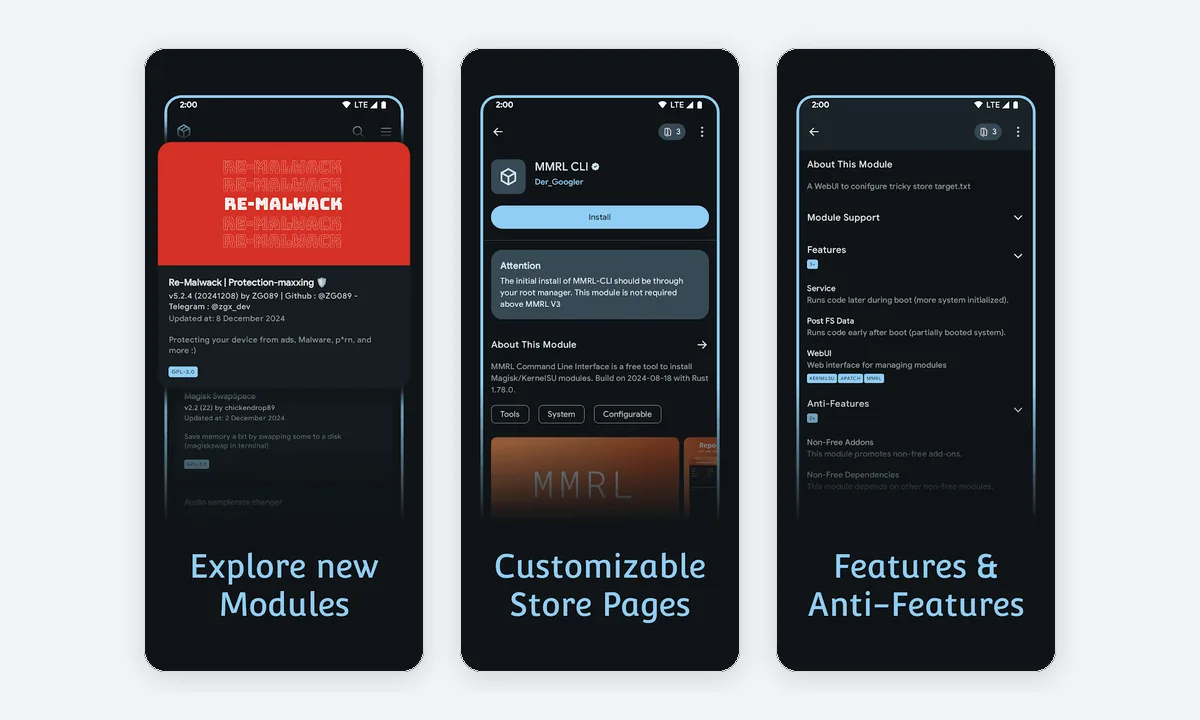
MMRL is a module manager that works with Magisk, KernelSU and APatch. It browses community repositories, installs modules in bulk, sorts out dependencies between them and opens a module’s web interface when it has one. It beats hunting for ZIP files on forums.

MMRL
Root hiding and Play Integrity
Banking, payment and some streaming apps refuse to run on rooted phones. These tools hide root and restore the integrity checks those apps look for. Expect some trial and error, because Google changes the rules often.
9. Shamiko
Shamiko hides root, Zygisk and your modules from the apps you choose. It reads Magisk’s DenyList: add the apps you want root hidden from, leave Enforce DenyList switched off, and Shamiko does the rest. It comes from the LSPosed team.

Shamiko
10. Play Integrity Fork
Play Integrity Fork, maintained by osm0sis, spoofs a certified device fingerprint so Google Play’s integrity check returns a passing verdict. It became the go-to fix after the original Play Integrity Fix was discontinued, and it works with Magisk, KernelSU and APatch.
On most rooted phones it gets you basic and device integrity. Strong integrity is another matter: since Google’s 2025 changes, it is rarely reachable with an unlocked bootloader.

Play Integrity Fork
11. Tricky Store
Tricky Store changes the certificate chain Android produces during key attestation, the hardware-backed check that newer integrity tests rely on. Paired with Play Integrity Fork, it is the usual combination for getting banking apps to work again. It needs Android 10 or newer, and stronger verdicts require a valid, unrevoked keybox.
The module is closed source. TEESimulator is a newer open-source alternative that simulates a hardware security environment in software.

Tricky Store
12. Hide My Applist
Many apps detect root simply by checking which other apps you have installed. Hide My Applist gives each app a filtered view of your app list, so your banking app never sees Magisk, LSPosed or a root file manager. It is still updated, and there is an open-source fork, HMA-OSS, if you prefer that.
Hide My Applist
13. Play Integrity API Checker
After setting up any of the tools above, you need a way to see whether they worked. This small app asks Google Play for an integrity verdict and shows which levels your phone passes: basic, device and strong. Run it after every change instead of guessing.
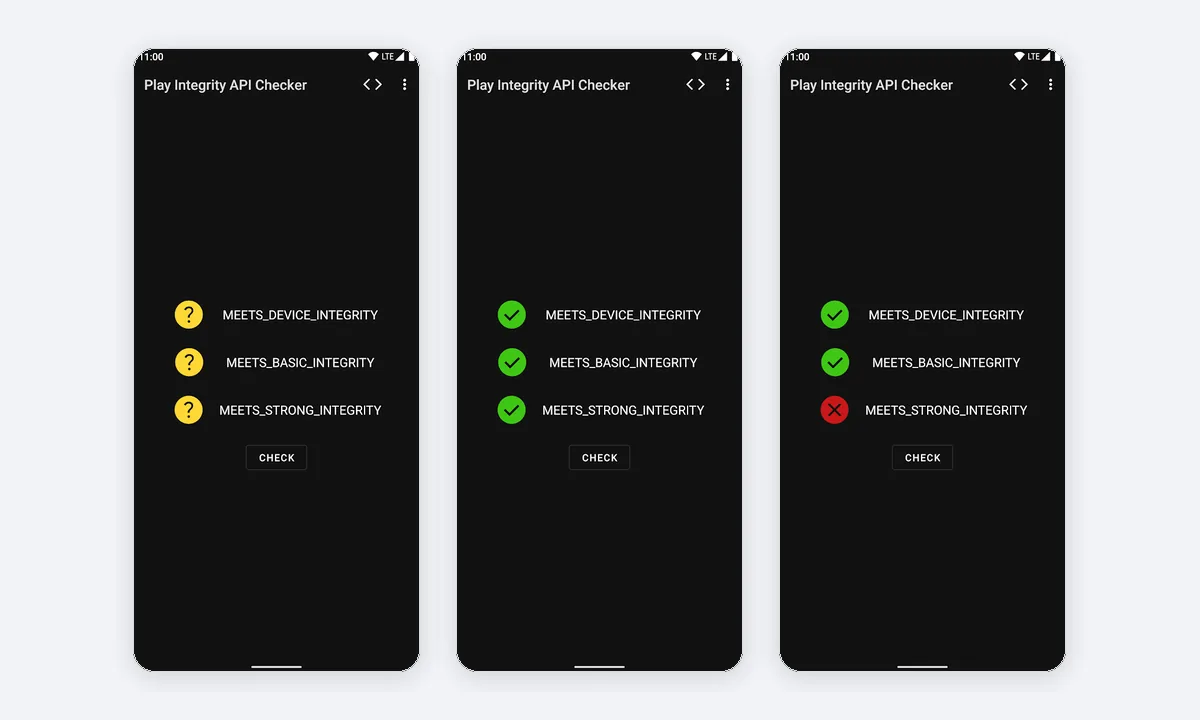

Play Integrity API Checker
Backup and restore
This is root’s most useful everyday benefit: backing up apps together with their data, so a factory reset or a new phone doesn’t mean starting from scratch. For options that don’t need root, see our list of the best Android backup apps.
14. Swift Backup
Swift Backup is the app that replaced Titanium Backup for most people. With root, it saves apps together with their data, and it also backs up messages, call logs and wallpapers. Backups can go to local storage or to cloud services such as Google Drive and Dropbox, on a schedule if you like.
The core features are free, and a premium upgrade unlocks the extras.
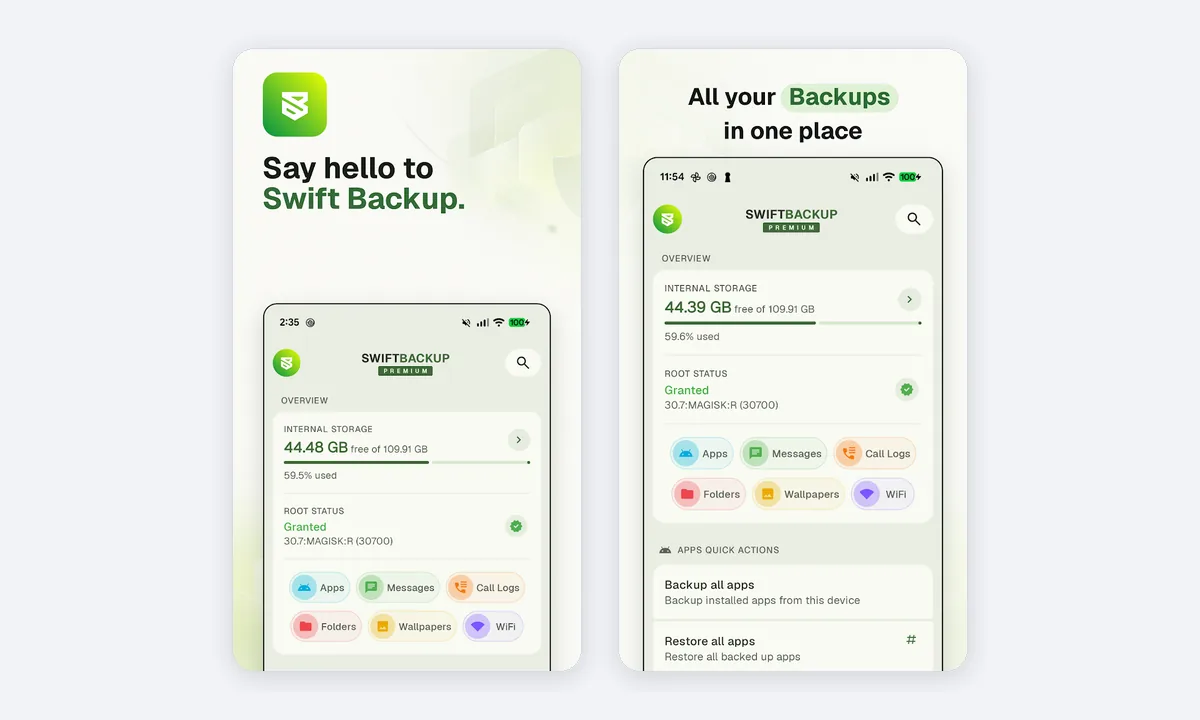

Swift Backup
15. Neo Backup
Neo Backup, formerly OAndBackupX, is the open-source alternative. It backs up apps with their data, supports encryption and scheduled backups, and restores everything in batches. There is no account or cloud service involved.
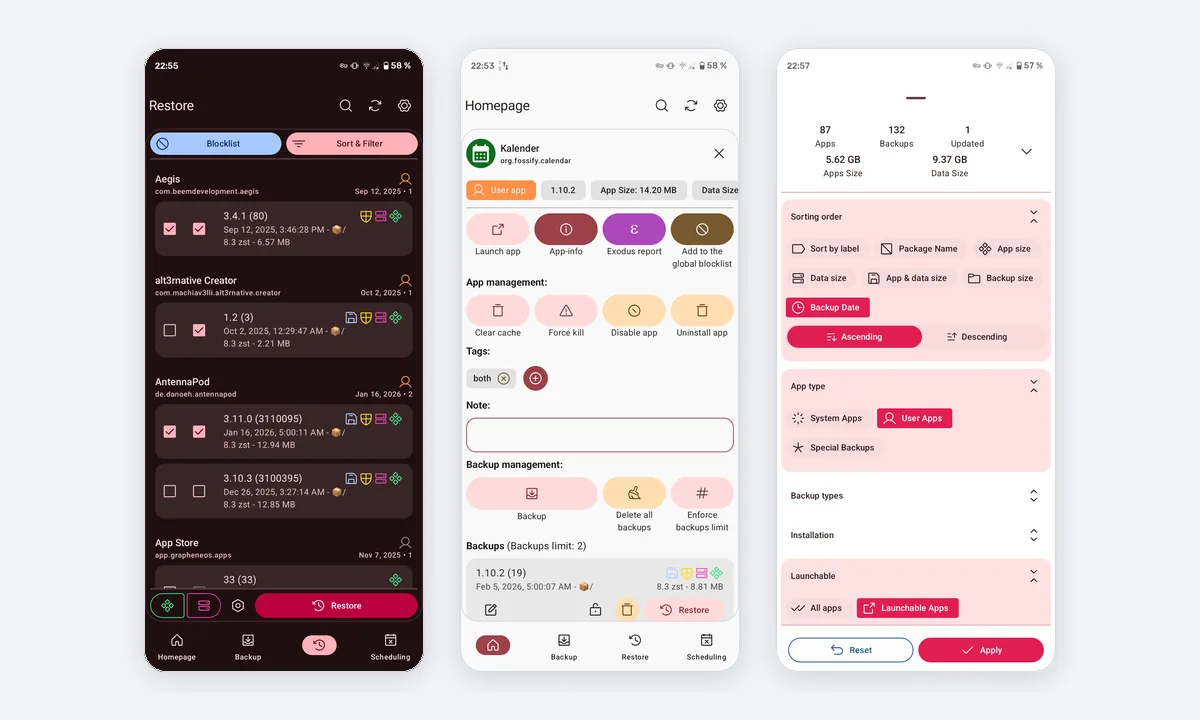

Neo Backup
App management and debloating
Phones ship with apps you can’t uninstall. With root you can freeze them, remove them systemlessly or stop them from running in the background. If you can’t root, our guide to removing bloatware without root still works on most phones.
16. App Manager
App Manager is the most complete app manager on Android, and it is open source. With root, it can freeze or uninstall any app, block individual activities, services and trackers inside apps, change permissions and app ops, and back up apps. It also shows a wealth of detail about every APK, from its signature to the libraries it bundles.
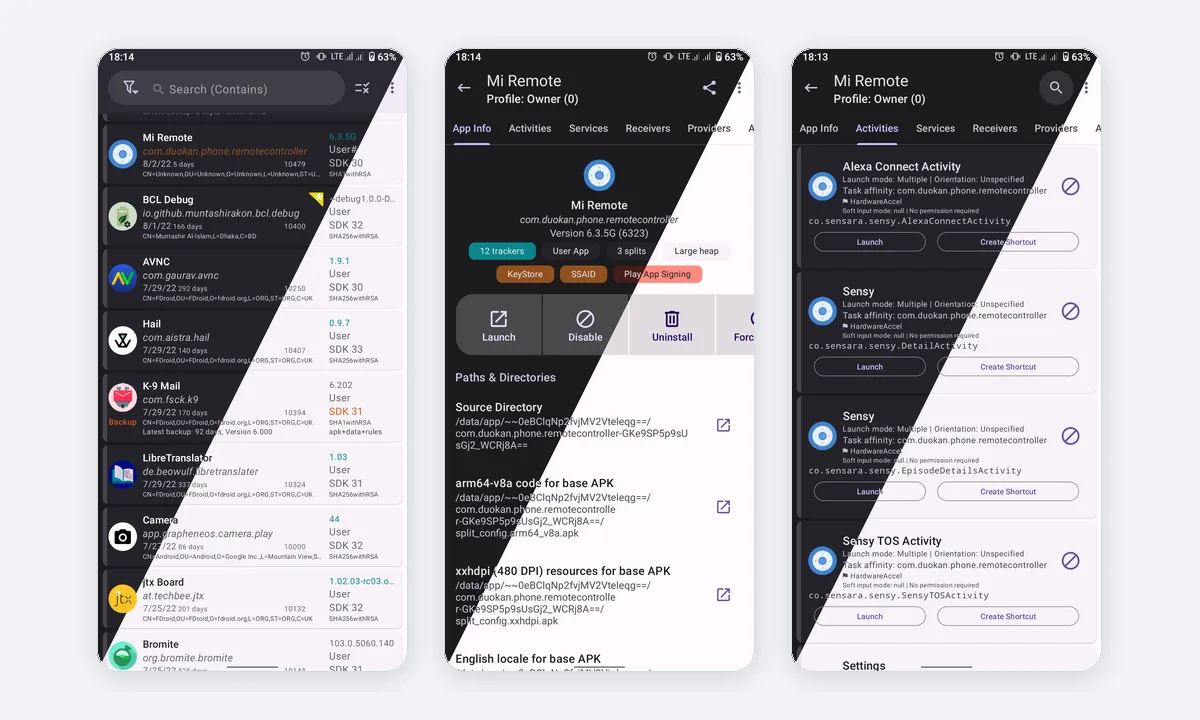

App Manager
17. Hail
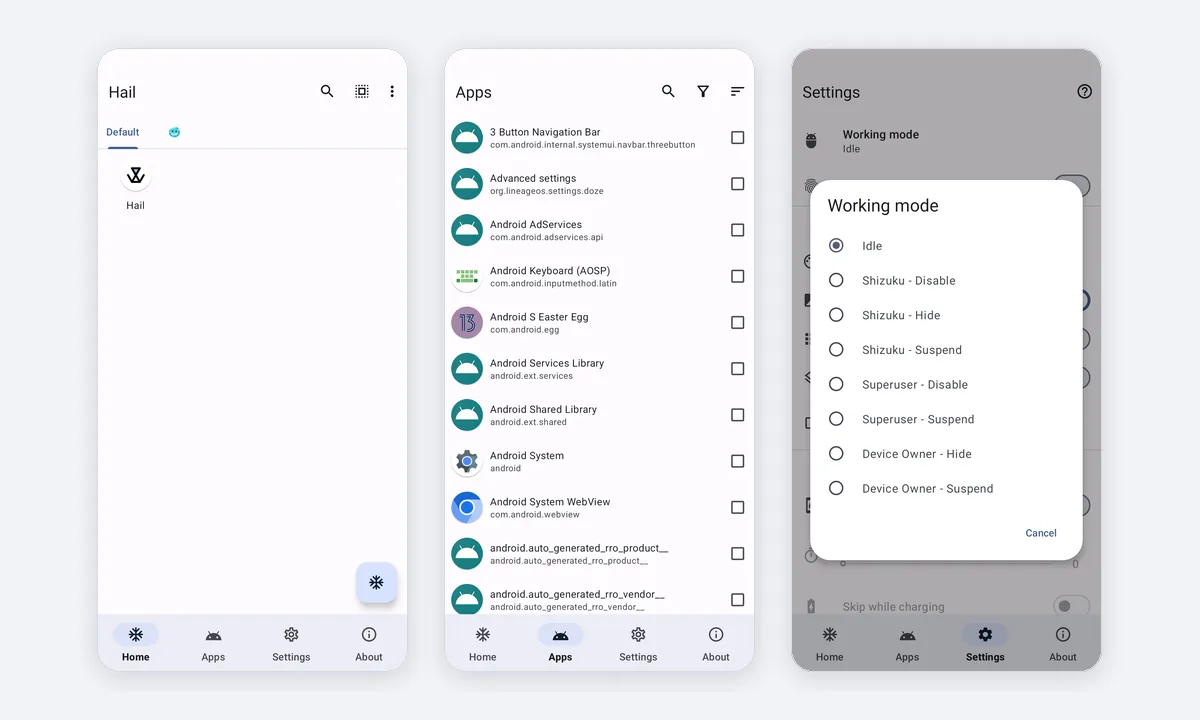
Hail freezes, hides or suspends the apps you don’t use every day, then brings them back with one tap or a home-screen shortcut. It works with root, but also through Shizuku or as a device owner, so it is useful on unrooted phones too.

Hail
18. Thanox
Thanox keeps apps in check. It controls which apps start at boot, which can keep running in the background, which can launch other apps and what permissions they get. It works best when activated through LSPosed, supports Android 16 and offers a reduced Shizuku mode as well.

Thanox
19. De-Bloater
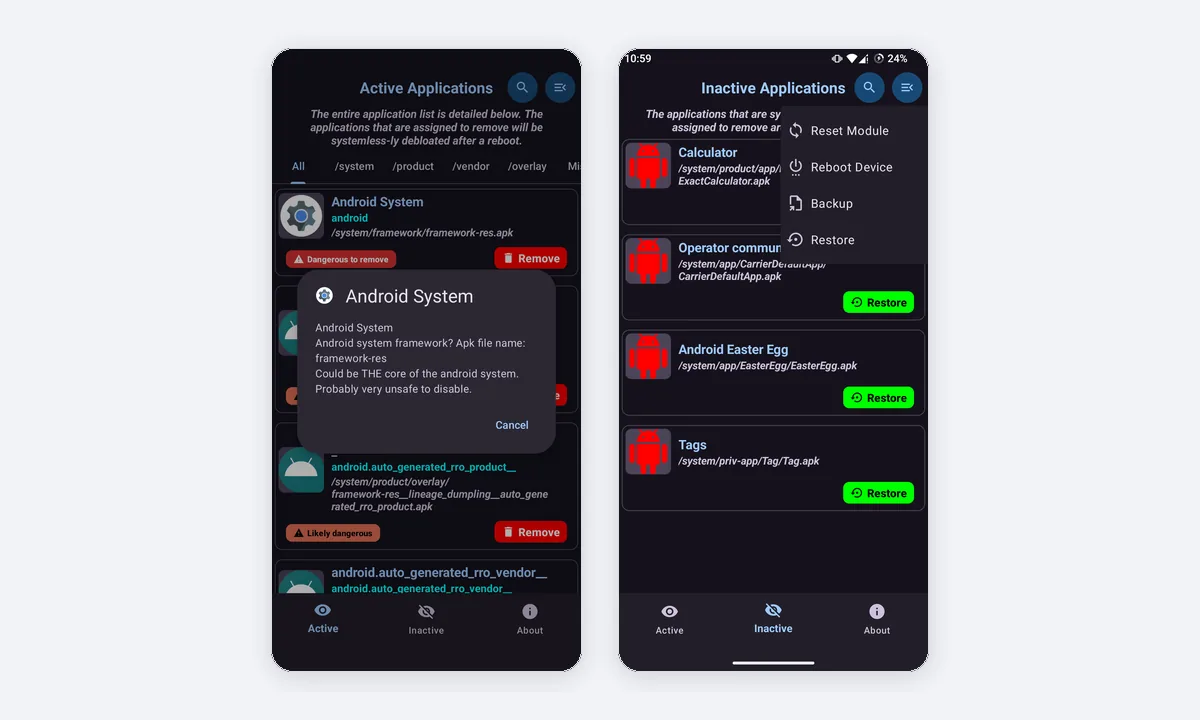
De-Bloater removes system apps the safe way. Instead of deleting files from the system partition, it hides them through a Magisk module, so you can undo everything by removing that module. Pick the apps from a list, reboot, and they are gone.
De-Bloater
20. Shizuku
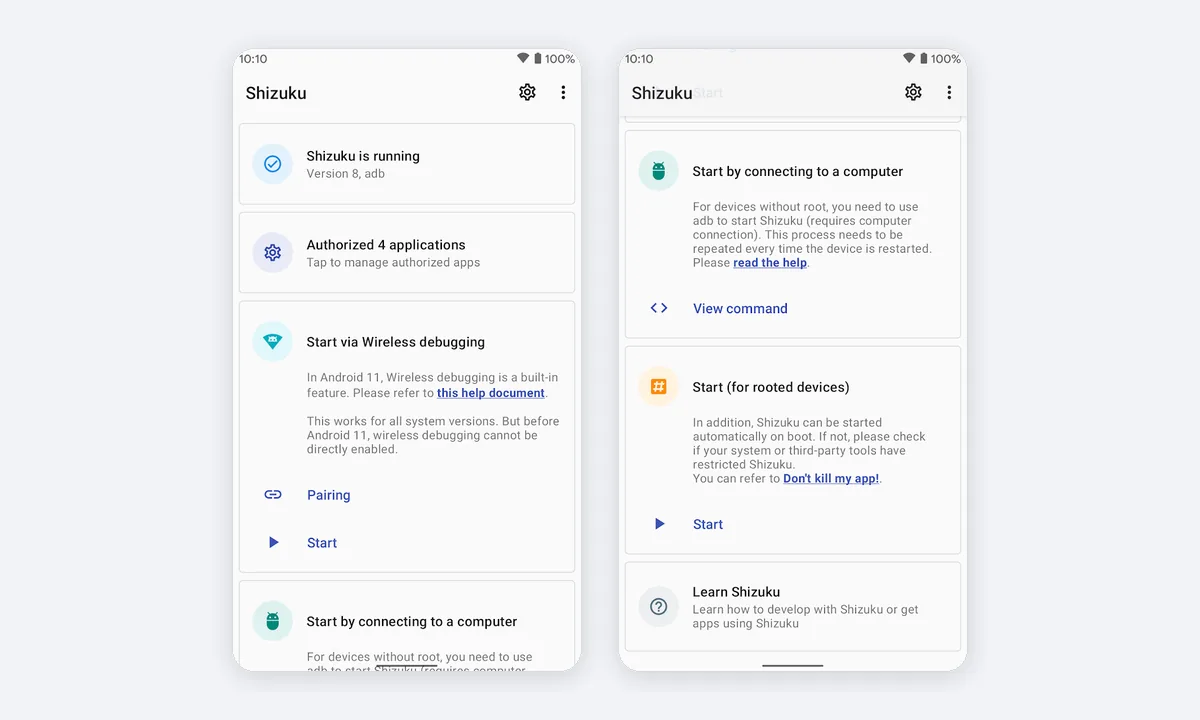
Shizuku lets other apps use system-level APIs directly. Without root, it has to be restarted through wireless debugging after every reboot; on a rooted phone it starts on its own. Hail, ColorBlendr and many system tweakers can use it.
The original app hasn’t had a release since mid-2025, but it still works, and maintained forks exist if you run into problems on newer Android versions.

Shizuku
Ad blocking, firewall and privacy
Root lets these apps work at the system level, so they filter ads and trackers in every app without taking up your VPN slot.
21. AdAway
AdAway blocks ads and trackers across the whole phone by updating the system hosts file. With root it doesn’t need a VPN, so it never conflicts with a real one. Choose from popular blocklists, add your own and allow individual domains when something breaks.
Google Play doesn’t allow system-wide ad blockers, so get it from F-Droid or the official website.
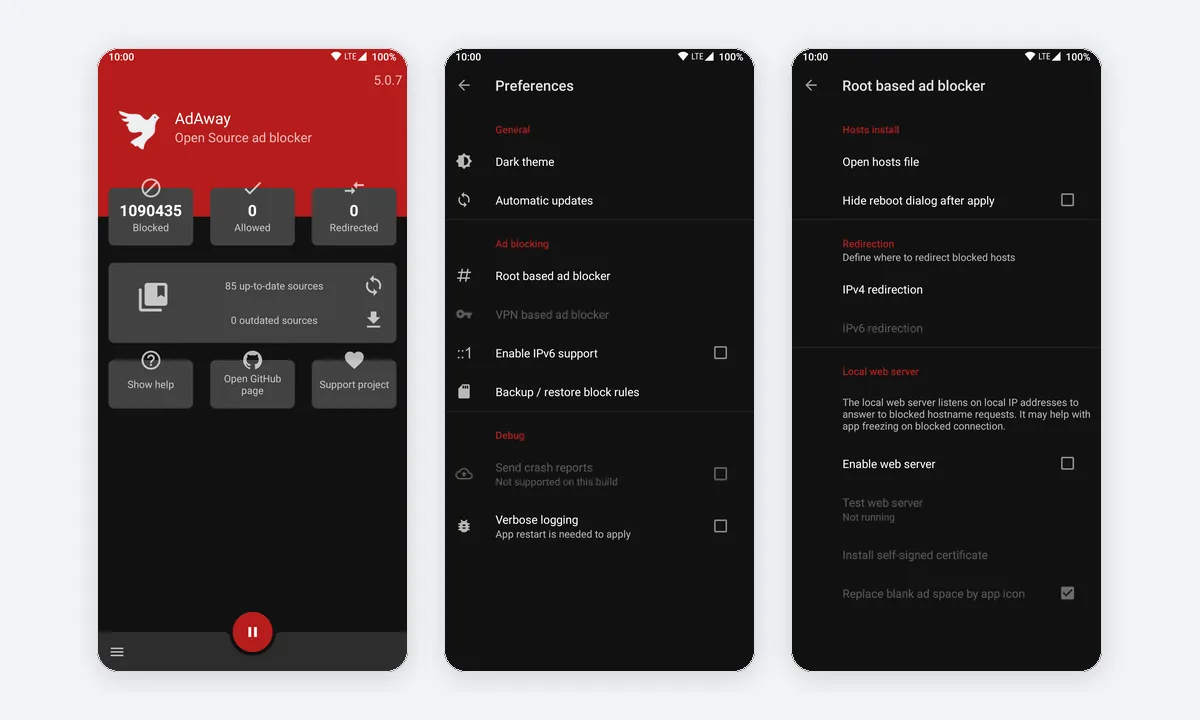

AdAway
22. bindhosts
bindhosts is a systemless hosts module for Magisk, KernelSU and APatch. It keeps your blocklists up to date on its own and offers several ways to mount the hosts file, which helps on setups where AdAway’s method gets detected. You control it from a web interface in KernelSU, APatch or MMRL, or with the module’s action button.
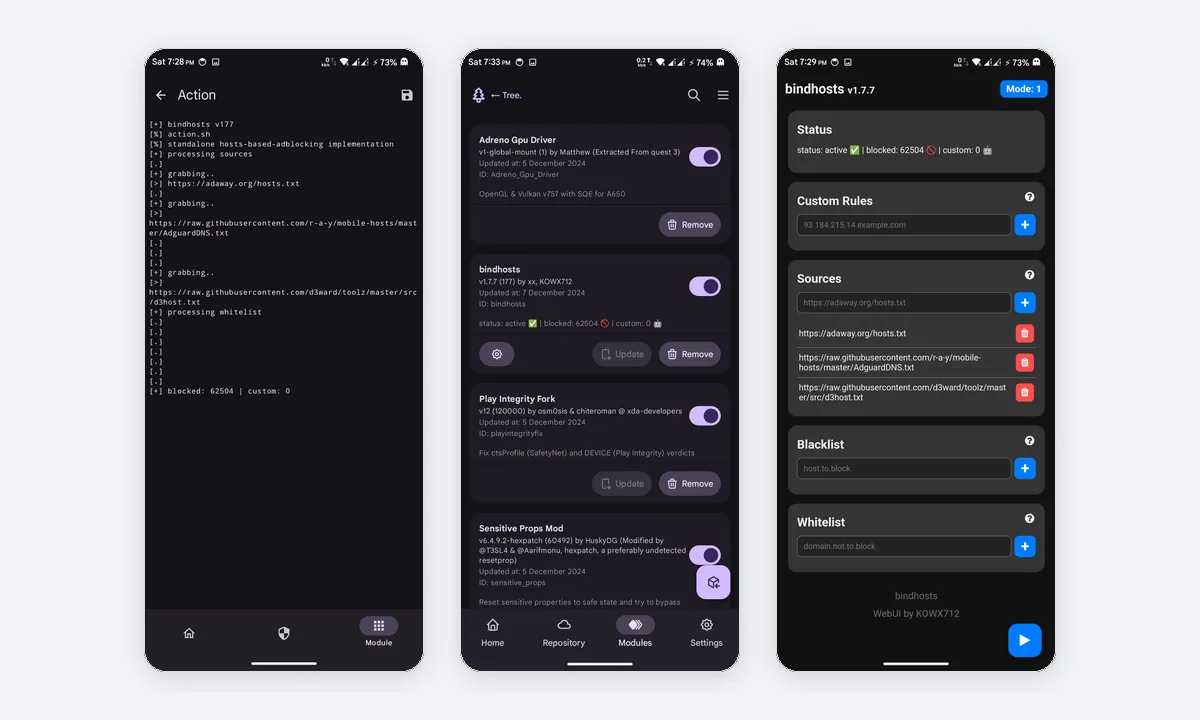

bindhosts
23. AFWall+
AFWall+ decides which apps may use Wi-Fi, mobile data, roaming or a VPN. It builds its rules with Linux iptables, so it doesn’t occupy the VPN slot the way firewalls for unrooted phones do. Version 5.0 arrived in October 2026, and the app remains free and open source.
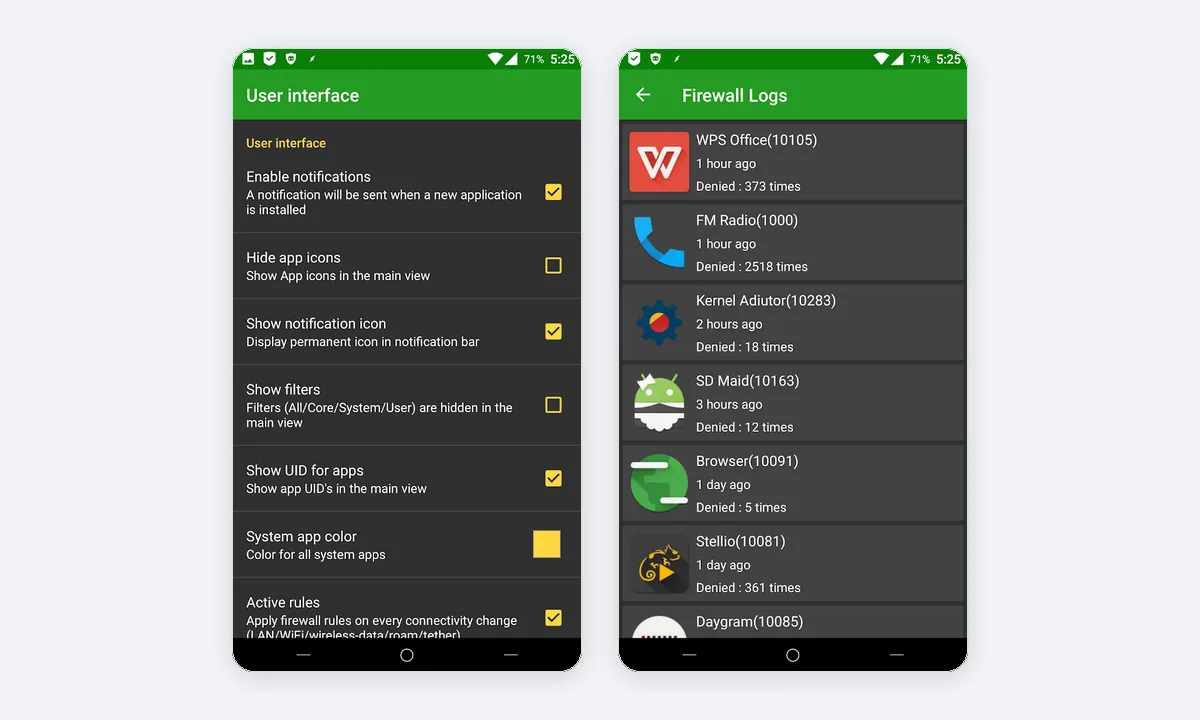

AFWall+
24. personalDNSfilter
personalDNSfilter blocks ads, trackers and malware domains at the DNS level and can send your lookups over encrypted DNS. Without root it runs as a local VPN; with root it can work in a mode that leaves the VPN slot free.
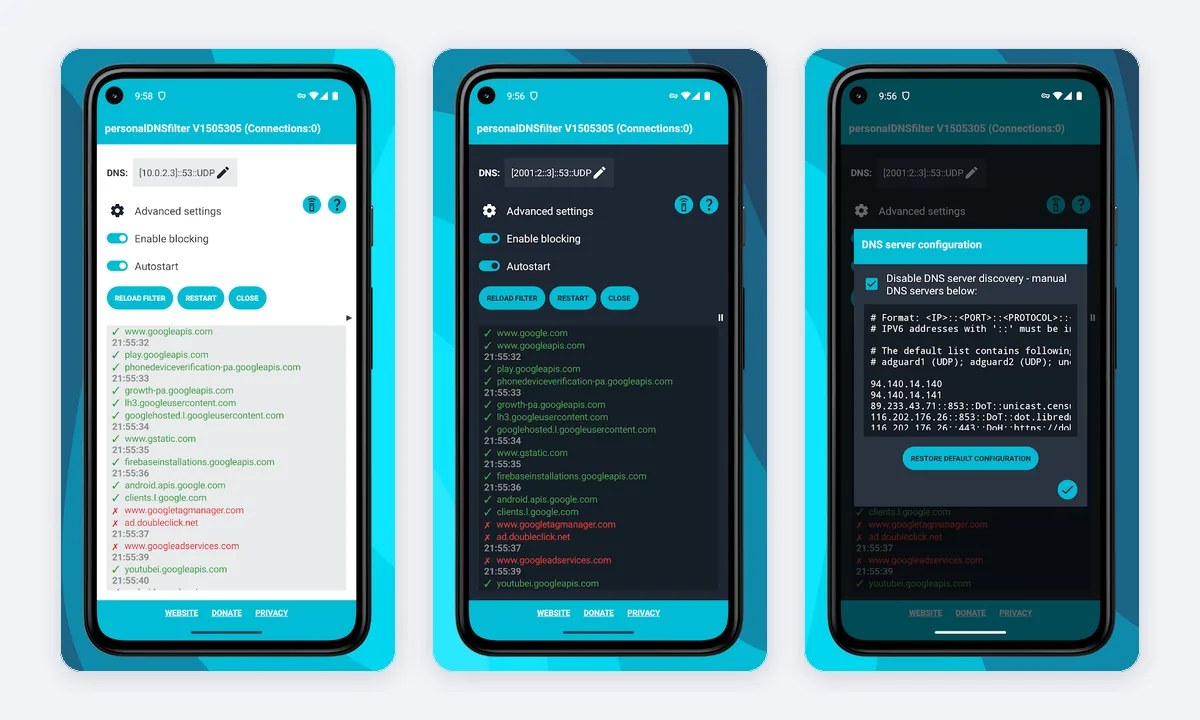

personalDNSfilter
25. PCAPdroid
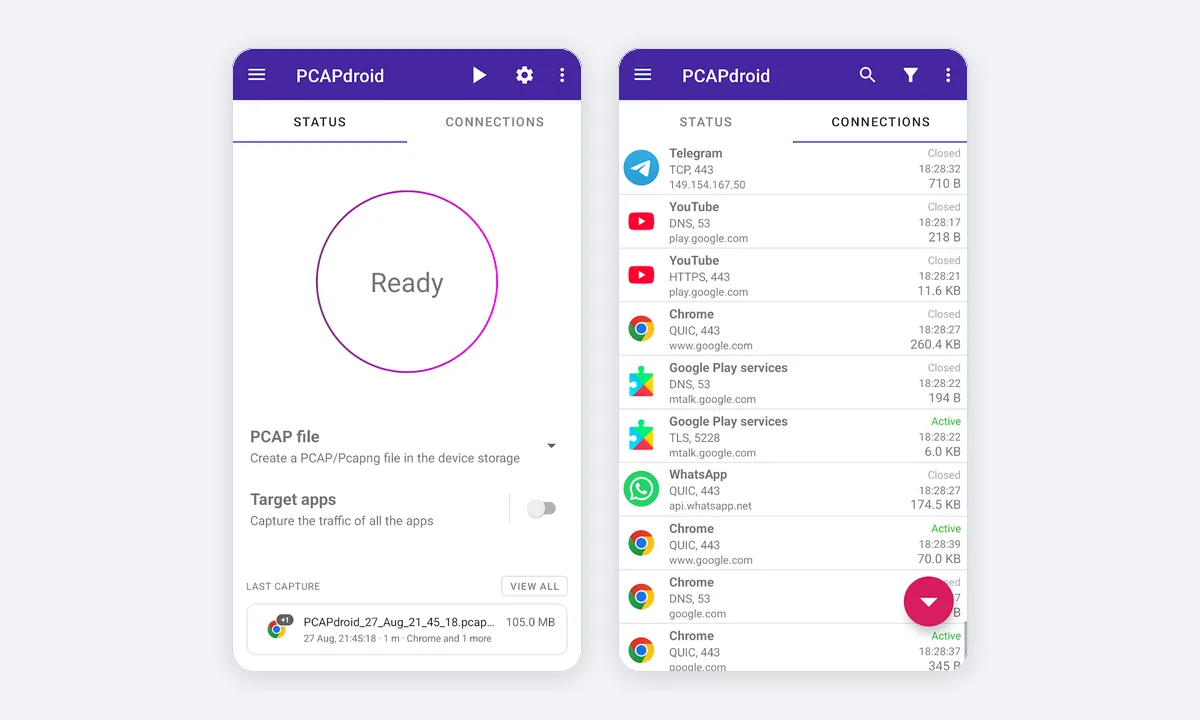
PCAPdroid shows every connection your apps make: which app, which server, how much data and when. Its root mode captures traffic without the VPN workaround, so it sees connections the VPN mode can miss. It can also block apps or domains and export captures for Wireshark.

PCAPdroid
26. Permission Ruler
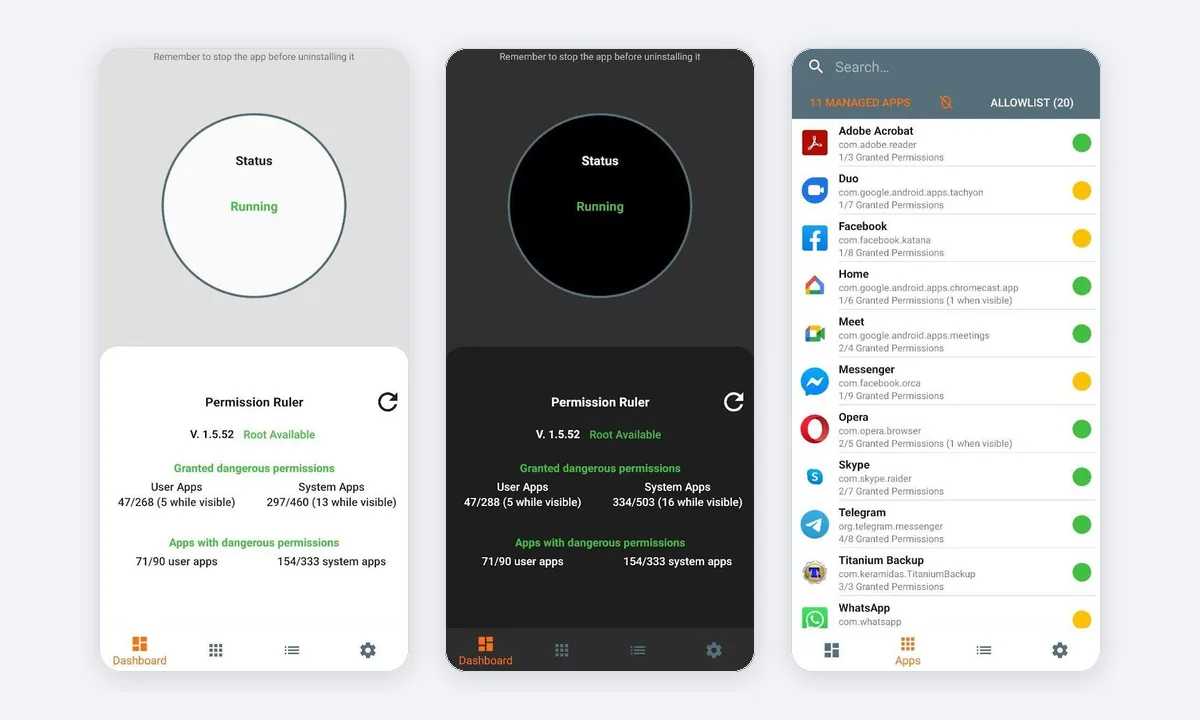
Permission Ruler takes sensitive permissions such as location, camera and microphone away from apps while your screen is off, then gives them back when you unlock the phone. It is a simple idea that stops apps from using those permissions in the background. Pause it before you uninstall it, or the permissions stay revoked.

Permission Ruler
Performance, battery and kernel tools
Tune your CPU and GPU, flash kernels and stop battery drain. Many recent phones also have a built-in charging limit, so check your battery settings before reaching for a module.
27. Franco Kernel Manager
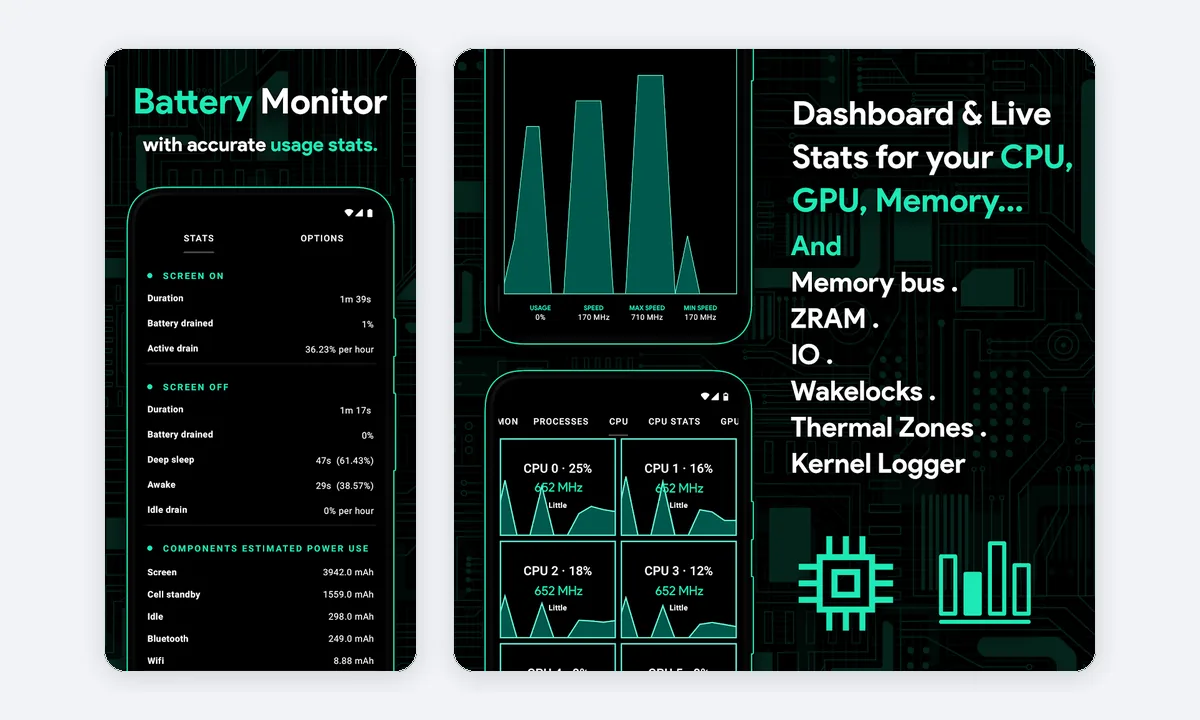
Franco Kernel Manager is the best-known kernel tuning app. It manages CPU and GPU frequencies and governors, display color and battery stats, and it flashes kernels and Magisk modules without a custom recovery. It works with most kernels, not just Franco’s own.
Franco Kernel Manager
28. Kernel Flasher
Kernel Flasher flashes AnyKernel3 ZIPs straight from your phone, backs up and restores the kernel partitions and handles both A/B slots. The original app was archived in 2025, and this maintained fork keeps it working on newer devices.

Kernel Flasher
29. 3C All-in-One Toolbox
3C All-in-One Toolbox puts dozens of system tools in one app: CPU, battery and network monitors, an app manager, a task manager, file tools and kernel controls. Root unlocks the deeper features. It is still updated regularly, and the pro version removes the ads.
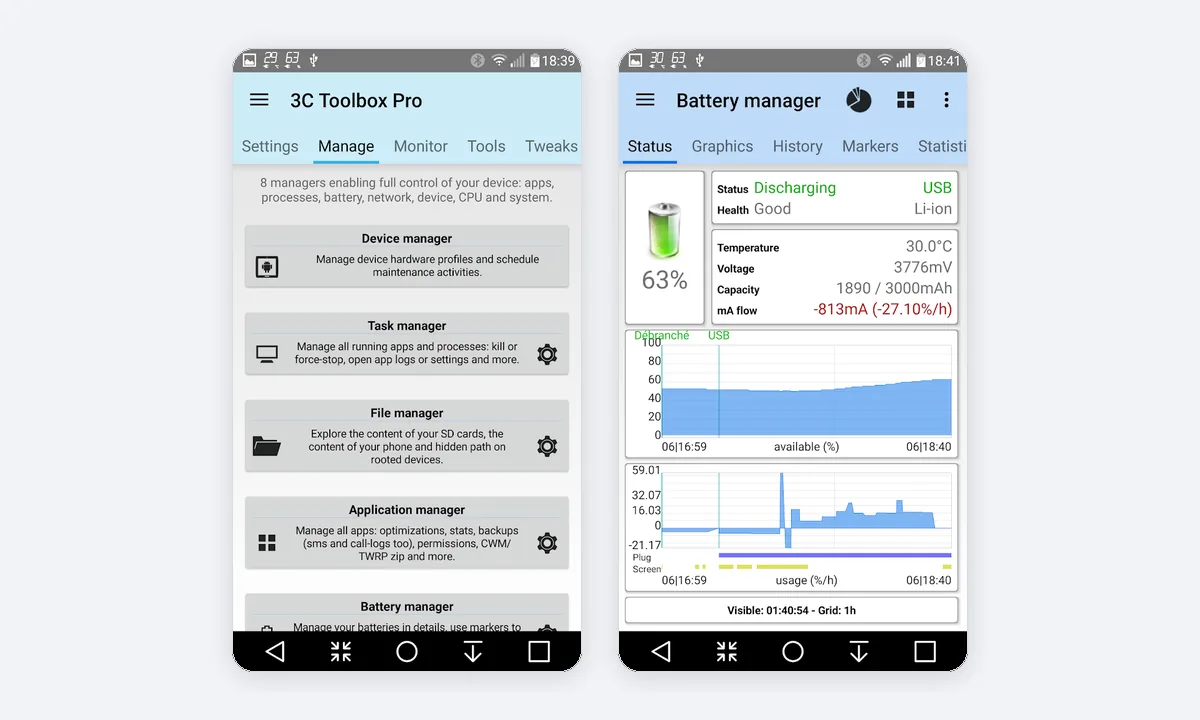

3C All-in-One Toolbox
30. FROSTY
FROSTY saves battery by freezing the groups of Google Play services components you don’t need, tightening Doze and switching off radios once the screen has been off for a while. It also disables Google’s analytics and telemetry services. Everything is set up from a web interface, and it works on Magisk, KernelSU and APatch.
Freezing parts of Google Play services can break features that depend on them, so enable one category at a time.

FROSTY
File managers and storage
A root file manager lets you see and edit system files, app data and the folders Android normally keeps out of reach.
31. MiXplorer
MiXplorer packs everything a power user could want into a light app: root browsing, tabs, cloud and network storage, an archive manager, a text editor and a media player, all highly customizable. It is free from the developer’s website, while the Google Play version, MiXplorer Silver, is paid.
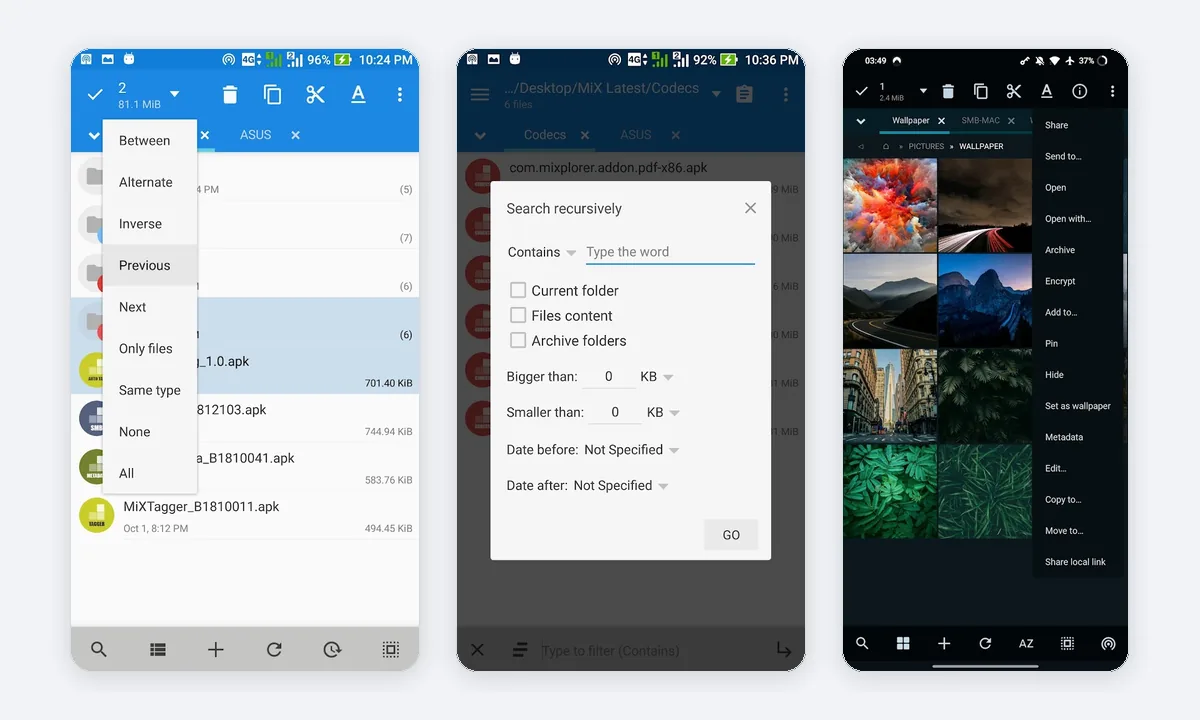

MiXplorer
32. Material Files
Material Files is an open-source file manager with a clean Material Design interface and proper root support. It handles archives as well as FTP, SFTP, SMB and WebDAV shares, and it is free with no ads.
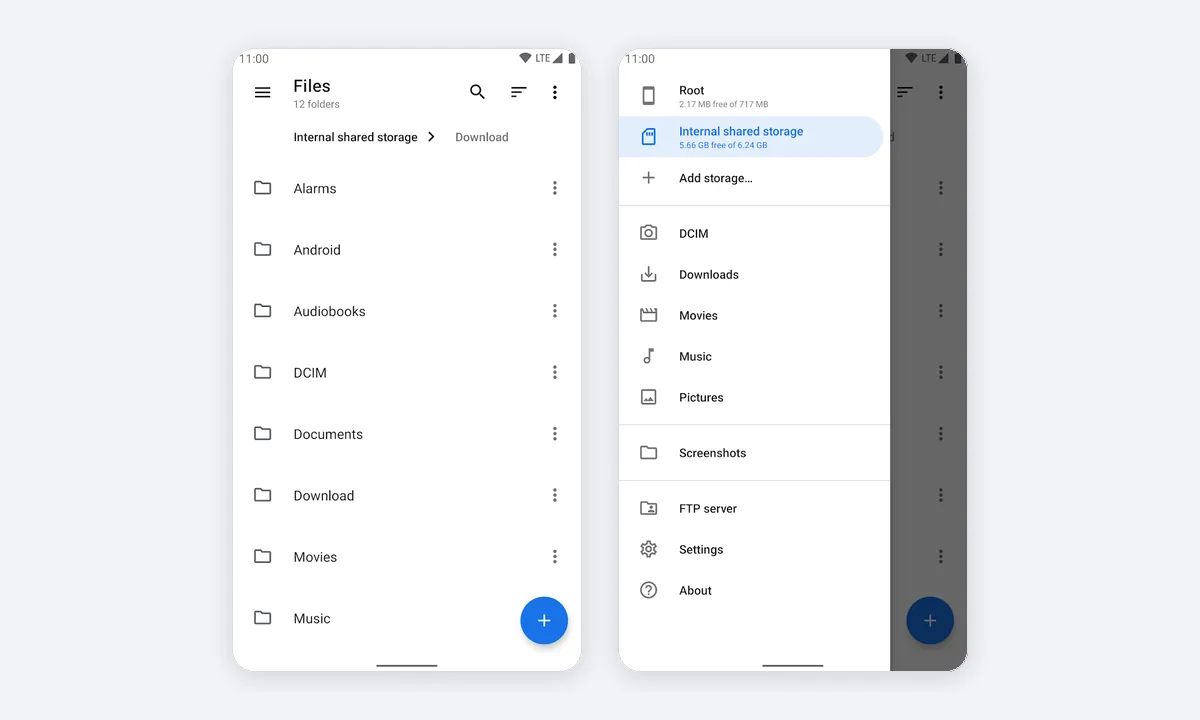
Material Files
33. Solid Explorer
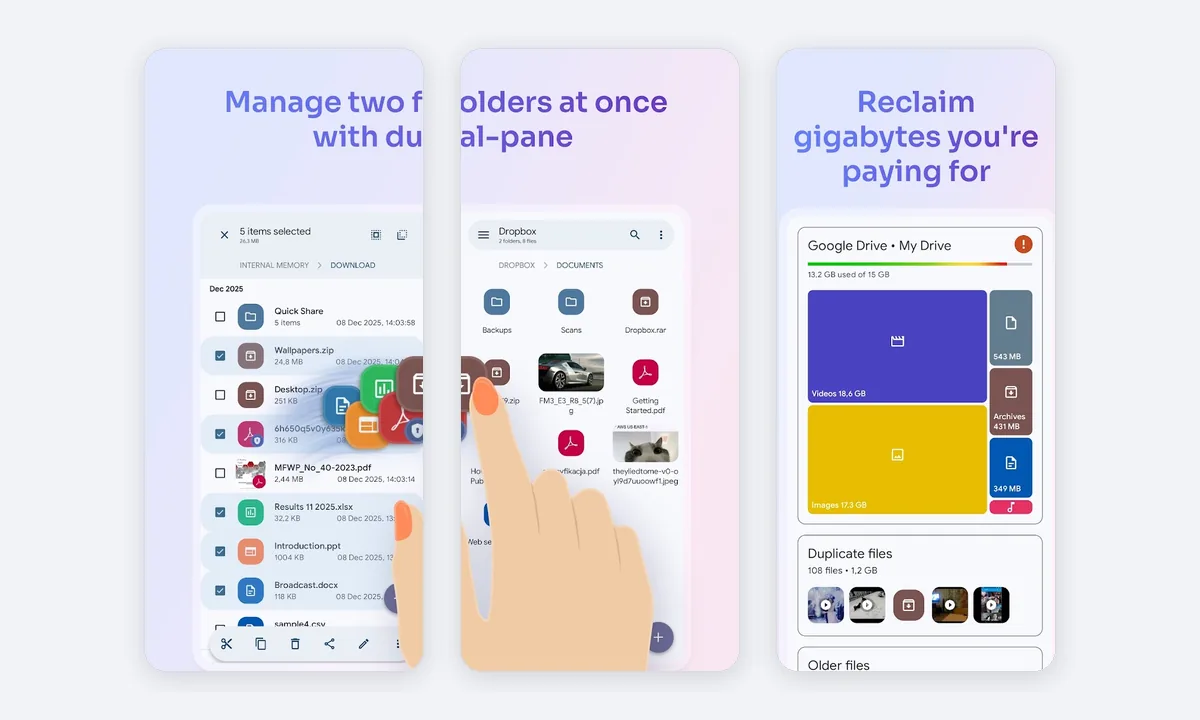
Solid Explorer is a polished file manager with two side-by-side panes, root access, cloud storage support and encrypted folders. It is free to download, and an upgrade removes the ads and unlocks the full feature set.
Solid Explorer
34. Root Explorer
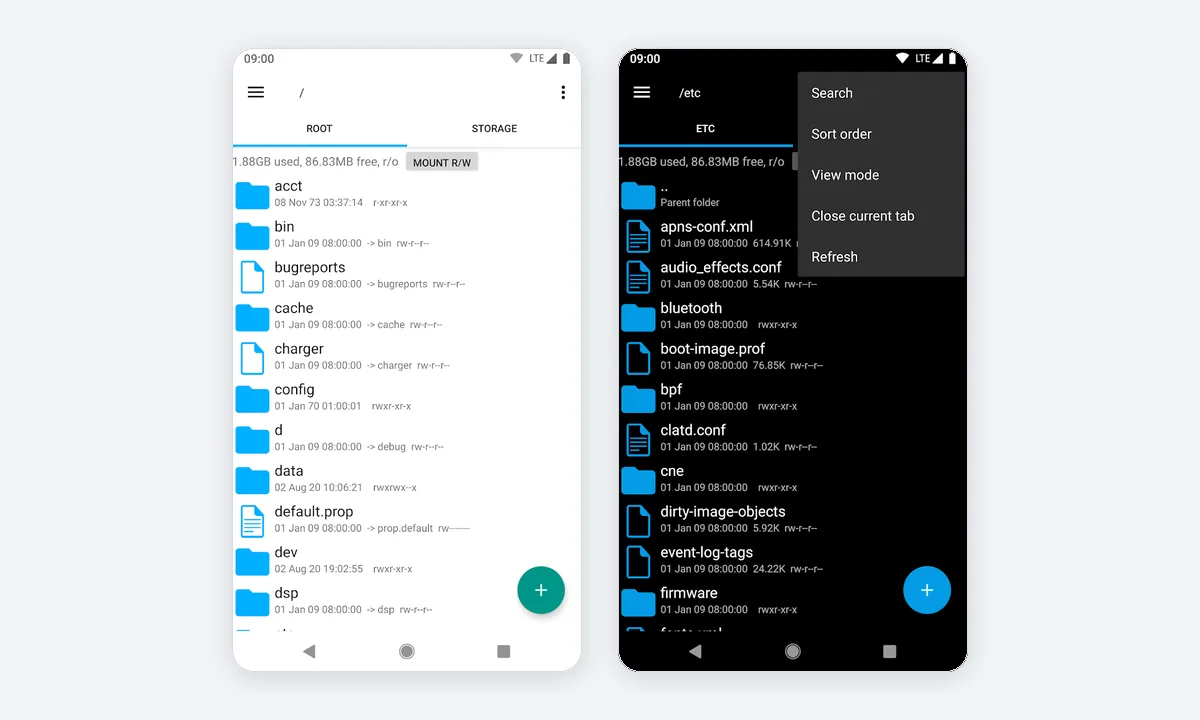
Root Explorer has been around for well over a decade and is still a dependable choice for working with system files. It mounts the system partition, changes file permissions and ownership, opens SQLite databases and handles archives. It is a one-time purchase with no ads.
Root Explorer
35. SD Maid SE
SD Maid SE, also called SD Maid 2, is the rewrite of the classic cleaner by the same developer. It finds files left behind by uninstalled apps, clears caches, removes duplicates and shows what is using your storage. Root gives it access to places other cleaners can’t reach, such as other apps’ private data folders.
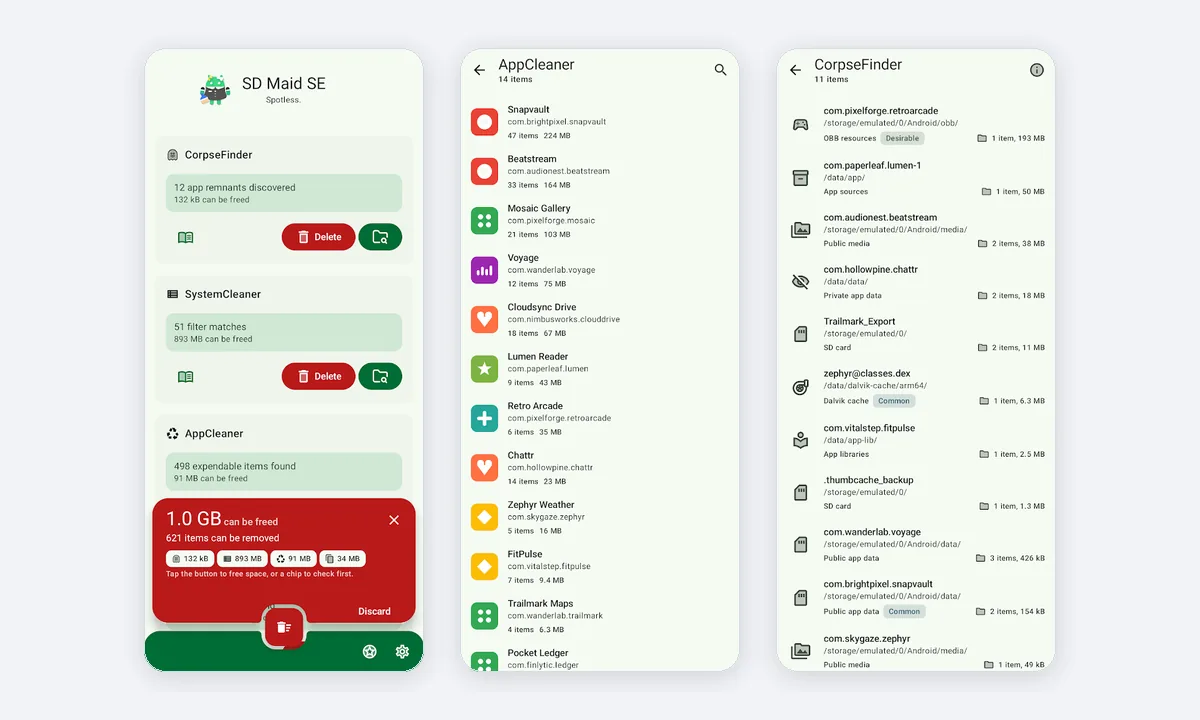

SD Maid SE
36. DiskDigger
DiskDigger recovers deleted photos, videos and files. Without root, it can only scan caches and thumbnails. With root, it scans the phone’s storage far more thoroughly, which gives you a much better chance of getting full-size originals back.
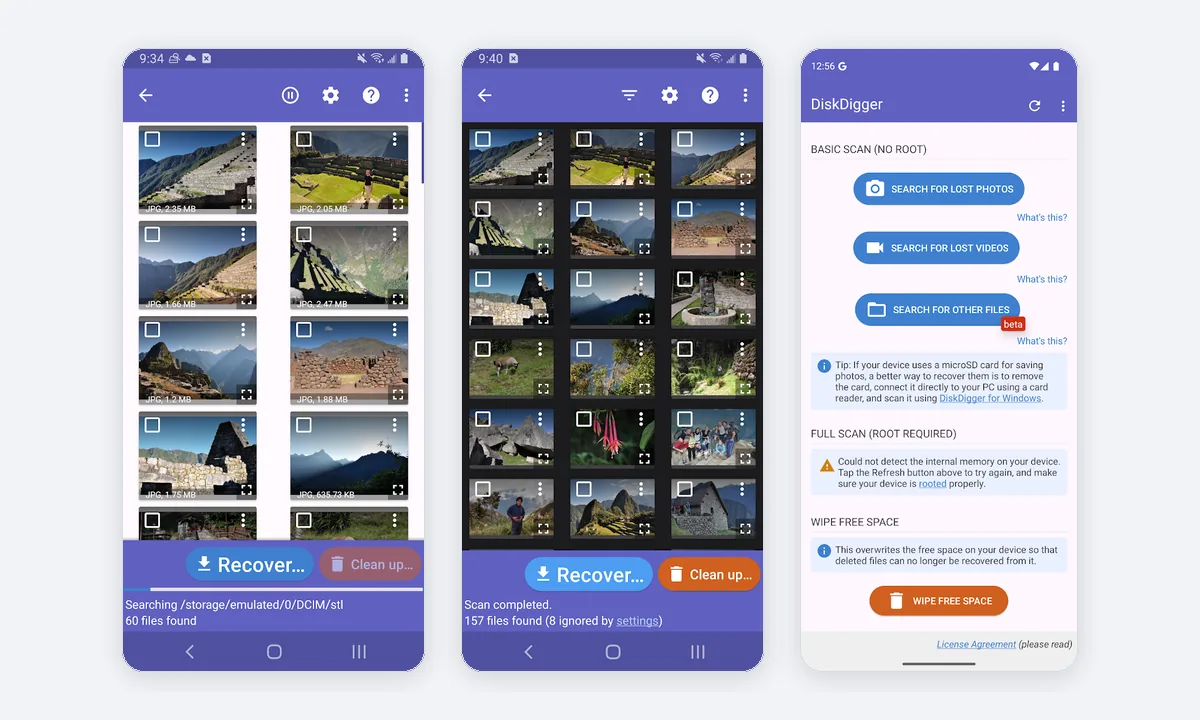

DiskDigger
Audio and customization
Change how your phone looks and sounds, well beyond what the settings app allows.
37. ViPERFX RE
ViPER4Android was the audio enhancer for rooted phones until its development stopped. ViPERFX RE is a modern, reverse-engineered port that brings its equalizer, surround and bass effects to current Android versions. It comes in two versions: one for older audio systems and one for phones that launched with Android 15 or later.
It has only been tested on a handful of devices, so make a backup first; on some phones it can cause a bootloop.

ViPERFX RE
38. Iconify
Iconify customizes the parts of Android 12 and newer that the settings app won’t let you touch: icon packs, Quick Settings tiles and their shapes, brightness sliders, notification styles, colors and more. It works best on Pixel phones and AOSP-based ROMs.
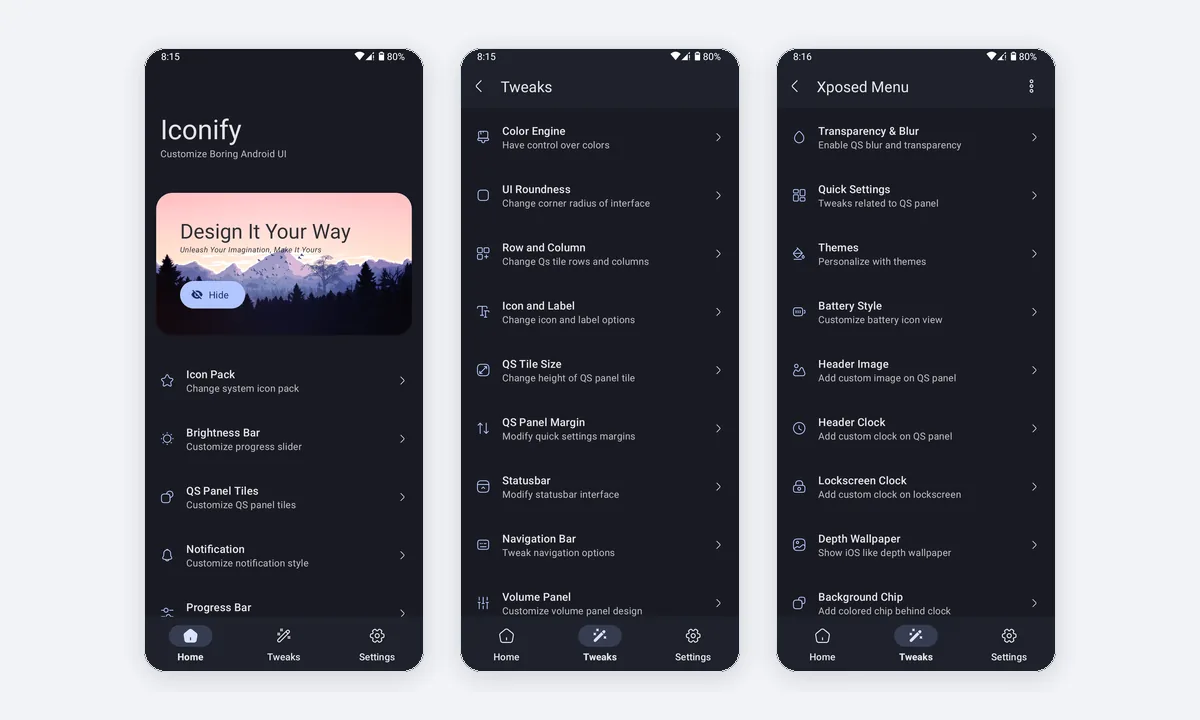

Iconify
39. ColorBlendr
ColorBlendr takes control of Material You. Pick any color for your system palette, adjust its saturation and lightness, and give different apps different styles. It works with root or with Shizuku.
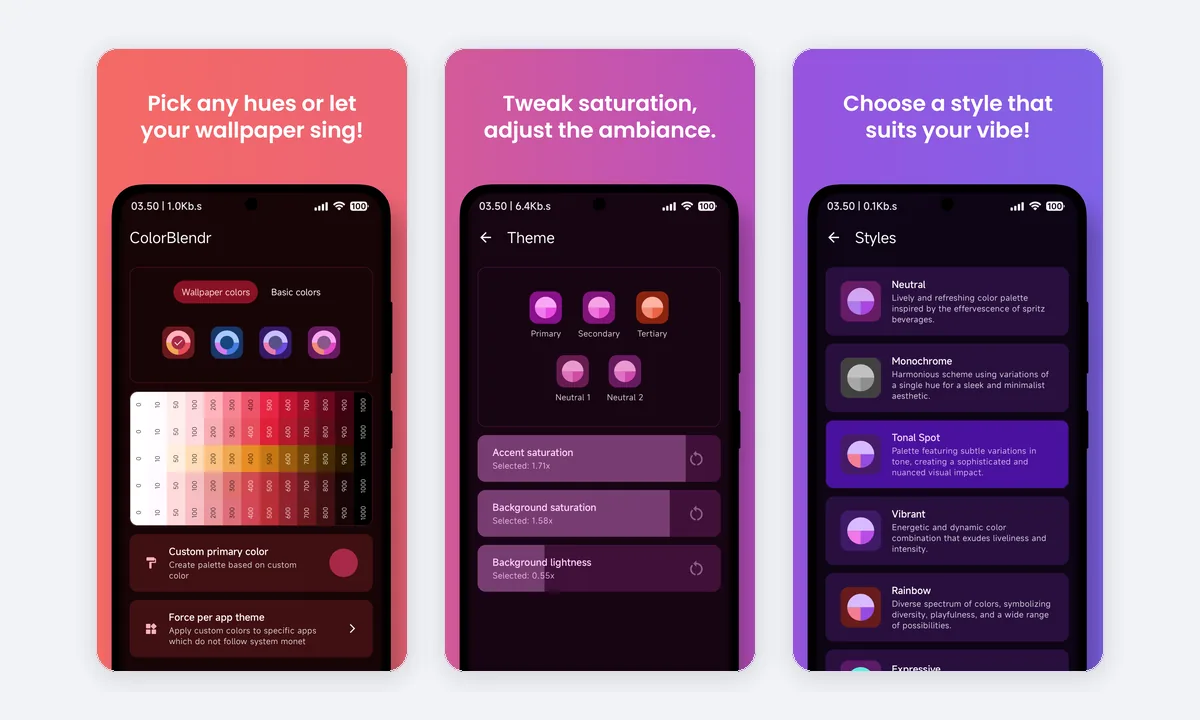

ColorBlendr
40. Font Manager
Font Manager by Androidacy changes your system font and emoji set without modifying system files. It builds a module behind the scenes, so removing that module brings back the stock font. The library of fonts and emoji packs is large.
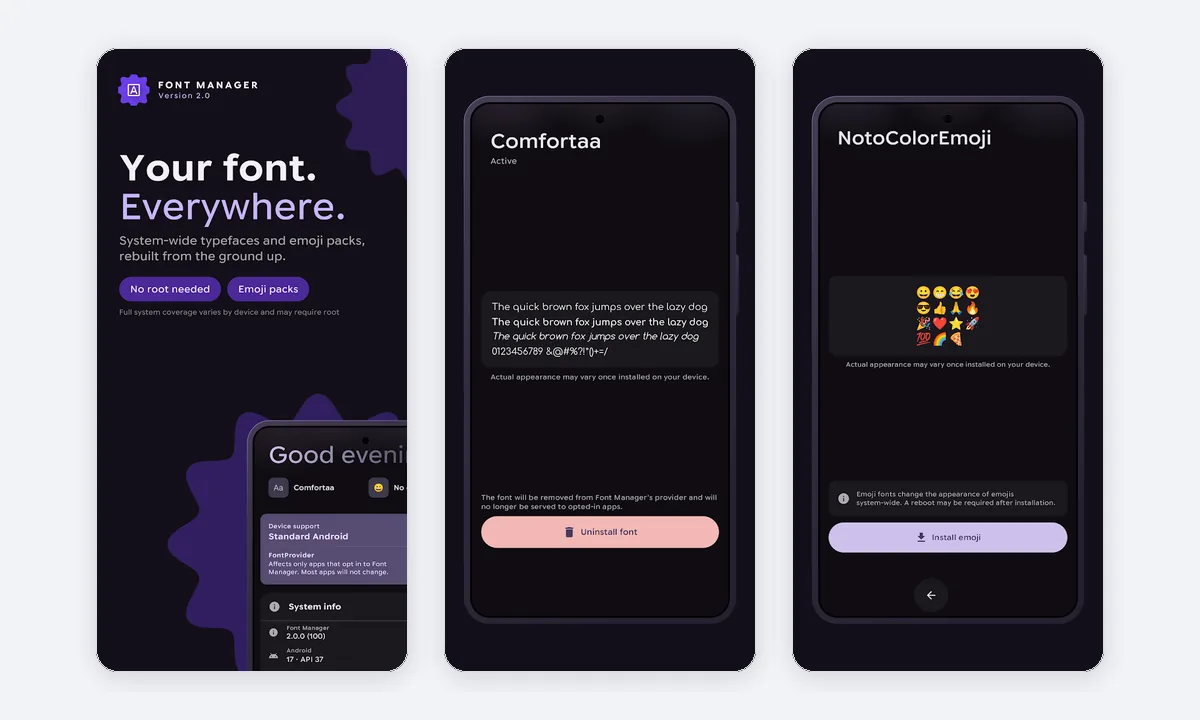

Font Manager
41. KnoxPatch
On a rooted Samsung phone, Knox shuts down several Samsung apps. KnoxPatch, an LSPosed module, gets many of them working again, including Samsung Health, Secure Folder, Samsung Cloud and SmartThings, on One UI 1 through One UI 8. Samsung Pass and Samsung Wallet still won’t work.
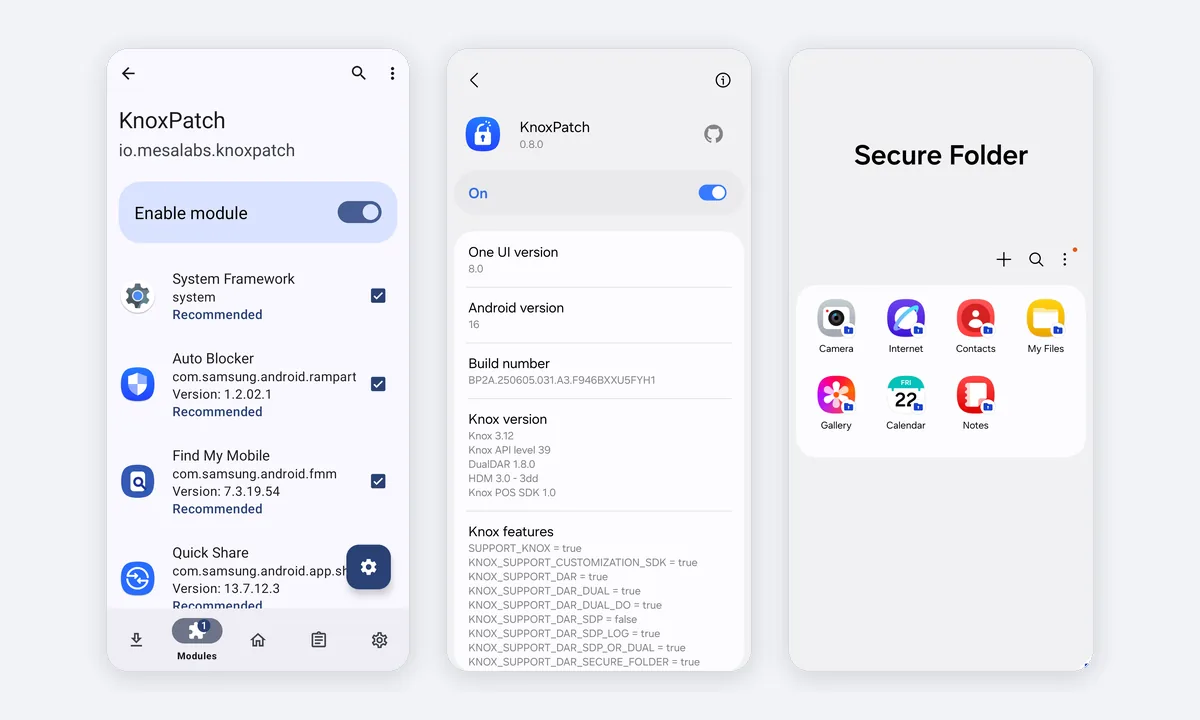
KnoxPatch
42. HyperCeiler
HyperCeiler is the go-to LSPosed module for Xiaomi, Redmi and POCO phones running HyperOS. It tweaks the status bar, home screen, Control Center, system updater and dozens of Xiaomi apps. Current versions target HyperOS on Android 15 and 16.

HyperCeiler
Automation and power-user tools
Automate your phone, run Linux tools, record calls and patch apps.
43. Tasker
Tasker can automate almost anything on Android, and root takes it further: changing settings that are normally off-limits, running shell commands and controlling other apps silently. The learning curve is steep, but nothing else is as flexible.
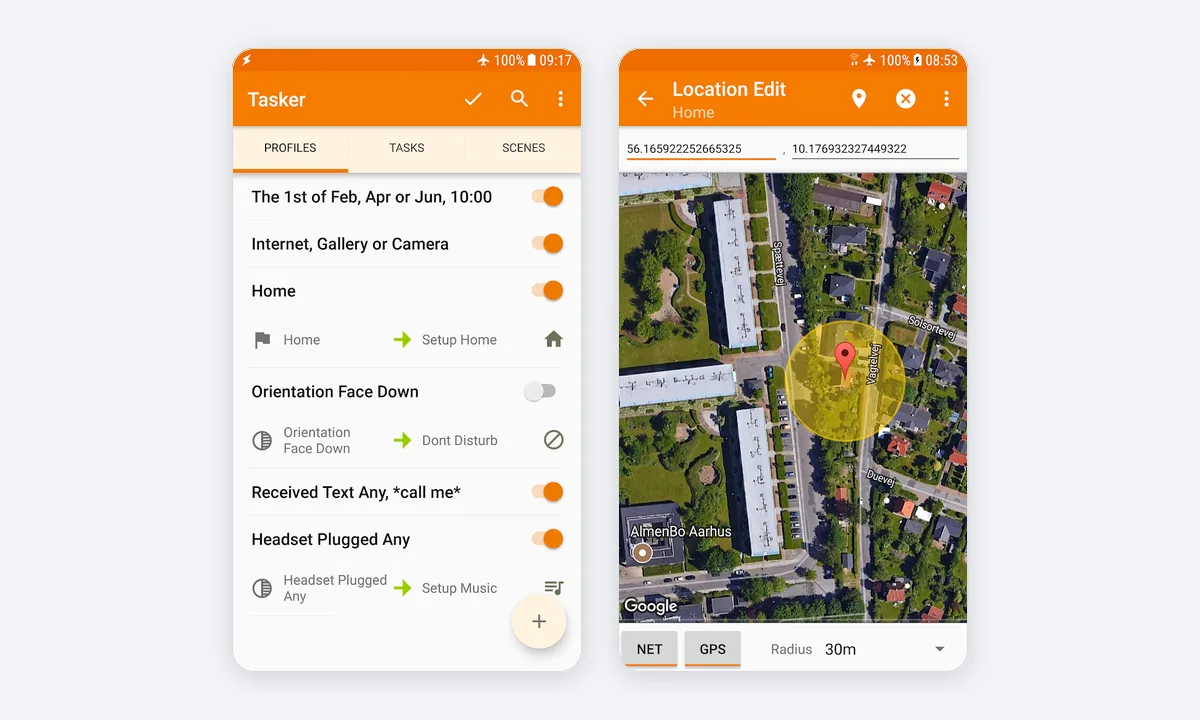

Tasker
44. MacroDroid
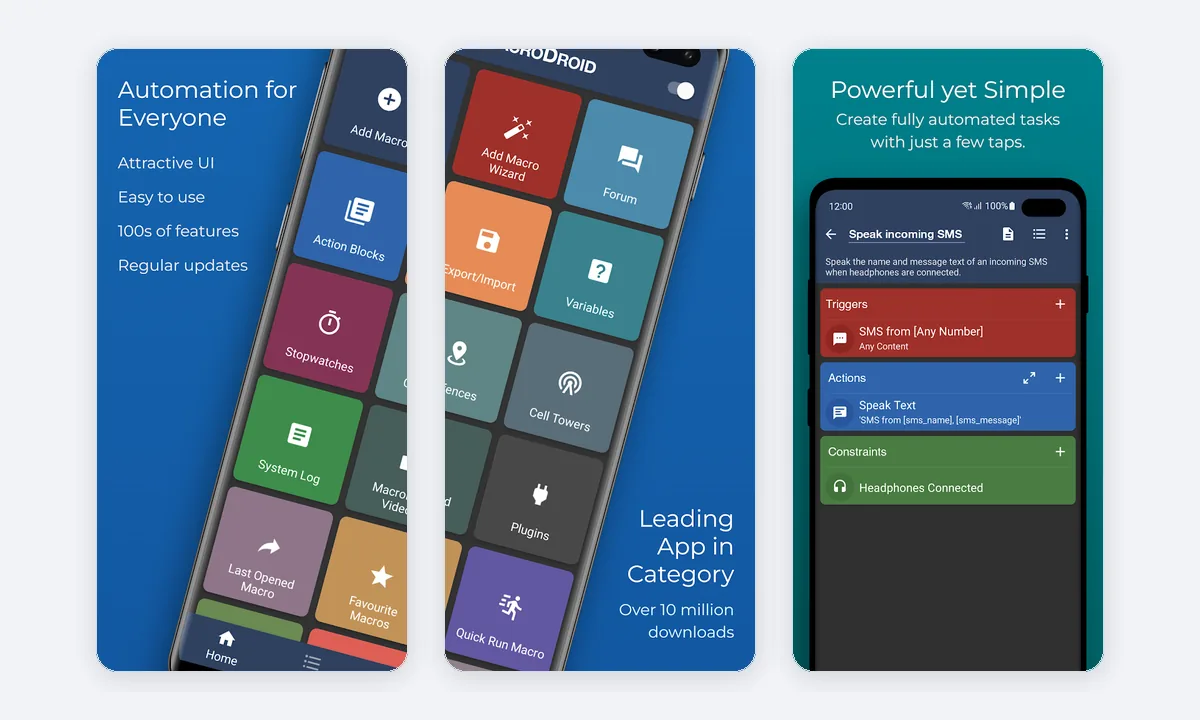
MacroDroid is the friendlier alternative: you build automations from triggers, actions and constraints in a few taps. With root, it can toggle mobile data, airplane mode and other protected settings directly and run shell commands.
MacroDroid
45. Termux
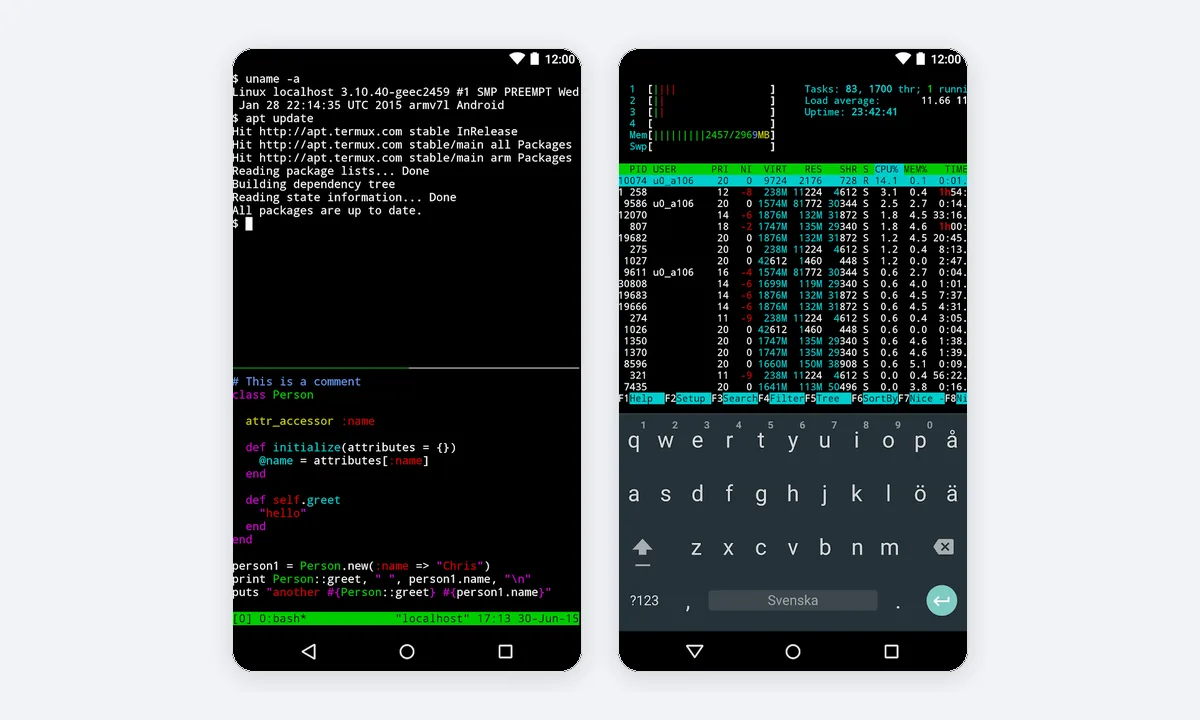
Termux gives you a full Linux command line with its own package manager, so you can install Git, Python, SSH and much more. On a rooted phone, add the tsu package to run commands as root from the same terminal.
The Google Play version is maintained again, and the F-Droid and GitHub builds remain available.

Termux
46. Basic Call Recorder (BCR)
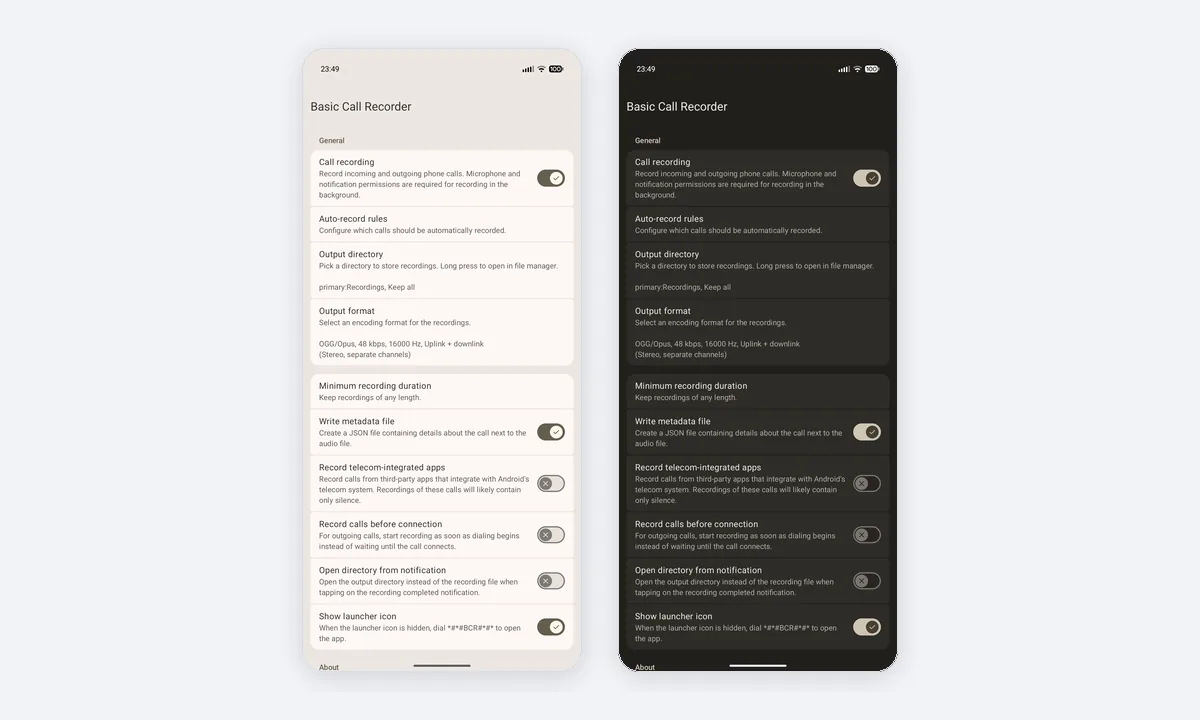
BCR records phone calls automatically on rooted phones. It installs as a system app through a Magisk or KernelSU module, which lets it record both sides of a call on recent Android versions that block ordinary recorders. Recordings go to a folder you choose, with no ads or tracking.
Check the law where you live before recording calls, because some places require everyone on the call to agree.

Basic Call Recorder (BCR)
47. ReVanced Manager
ReVanced Manager patches apps such as YouTube and YouTube Music to block ads, allow background playback and add other features. On a rooted phone, it can mount the patched version over the original app, so you keep using the official app and your account. Morphe, a newer patcher from some of ReVanced’s original developers, is worth a look too.

ReVanced Manager
Apps we removed from this list
If you have read earlier versions of this list, you will notice that some familiar names are gone. Here is why:
- SuperSU, Titanium Backup, ROM Toolbox, GravityBox and LiveBoot: abandoned for years, and broken or pointless on current Android versions.
- Greenify, Servicely and DriveDroid: no longer updated or no longer on Google Play. Android’s own battery management now handles most of what Greenify did.
- Lucky Patcher and Xmod: built to get around paid features and in-game purchases, and fake copies regularly carry malware.
- Advanced Charging Controller: no new release since 2023. Many recent phones include a charging limit in their battery settings.
- PixelXpert and the original ViPER4Android: PixelXpert has been archived by its developer, and ViPER4Android lives on as ViPERFX RE, listed above.
- Dumpster and AdBlock Plus: neither needs or uses root.
- Unlimited Google Photos tricks: spoofing a Pixel to get free storage breaks Google’s terms and can put your account at risk.
Frequently asked questions
What is the best root app for Android in 2026?
For most people, Magisk. It supports the widest range of phones and modules, and nearly every tool on this list works with it. KernelSU Next and APatch are strong alternatives on newer phones.
Is rooting safe?
It is if you are careful. Unlocking the bootloader wipes your phone and weakens some security protections, and a bad module can cause a bootloop, so keep backups and a copy of your original boot image. Install root apps only from official sources.
Will banking apps work on a rooted phone?
Often, yes, with Shamiko or Hide My Applist plus Play Integrity Fork and Tricky Store. Apps that demand strong integrity or run their own root checks may still refuse to open, and results can change whenever Google or your bank updates its checks.
Should I use Magisk, KernelSU or APatch?
Magisk if you want the widest compatibility and the simplest setup. KernelSU, or KernelSU Next for older kernels, if you want root inside the kernel with per-app root profiles. APatch if your phone has no KernelSU support and you don’t want to build a kernel. Whichever you choose, use only one.
Do I still need a custom recovery like TWRP?
No. Magisk, KernelSU and APatch all root your phone through a patched boot image that you flash with fastboot, and modules are installed from the manager apps.
Can I unroot my phone later?
Yes. Magisk and the other root managers can uninstall themselves and restore the original boot image. Many phones also let you relock the bootloader, but only after you are back on unmodified stock firmware, or the phone may not boot.
Final thoughts
Rooting in 2026 rewards people who like being in control: a phone without ads, with complete backups and with features its maker left out. Start with a root manager and a backup app, add new tools one at a time, and keep a copy of your stock boot image somewhere safe. Which root apps can’t you live without? Tell us in the comments.

Amazing post mam. I really liked the way you explained about each and every App. Thanks for sharing this.
Most welcome.
Amazing post. I understand every description of the apps. Thank you
Most welcome. Stay tuned with us for more amazing contents.
This is not up to date for 2022. Gravity box does not support android 12 and vanced is no longer developed.
Thanks for your feedback. We are updating the page; stay tuned.