Lawmakers and established technology corporations are facing increased scrutiny over warnings of existential artificial intelligence threats, which industry observers say distract from routine software errors, data center resource strains, and anticompetitive market practices.
Key points
- Critics argue existential AI threats distract from immediate software flaws and resource strains.
- Senator Bernie Sanders proposed up to 20 years in prison for unapproved model training.
- Incumbent tech firms face accusations of using regulatory licensing to hinder open-source competitors.
- Recent automated agent incidents stemmed from human configuration errors rather than autonomous actions.
The debate over theoretical superintelligence has intensified across Capitol Hill and enterprise boardrooms. While executives warn that rogue models could pose global dangers, critics point out that these claims help entrenched companies push for restrictive licensing while allowing public officials to sidestep unresolved domestic policy issues.
Proposed Legislation and Political Scrutiny
Congressional attention has shifted toward worst-case artificial intelligence scenarios. Senator Bernie Sanders introduced the Ban Artificial Superintelligence Act, a bill that proposes up to 20 years in federal prison for developers who train advanced models without prior government authorization. The proposal effectively assigns writing software the same criminal penalties as manufacturing illegal weapons.
Other prominent political figures have also focused on synthetic threats. Former President Barack Obama has encouraged Democrats to pass strict model development rules, while former President Donald Trump has engaged in public disputes with technology executives over software controls. Critics note that addressing theoretical rogue algorithms carries little political liability compared to resolving domestic issues such as healthcare costs, municipal infrastructure repairs, and public education funding.
Corporate Strategy and Licensing Barriers
Beyond legislative debates, corporate warnings about catastrophic software risks often align with commercial incentives. Tech firms facing pressure from agile, open-source alternatives have increasingly highlighted existential risks in public statements and regulatory filings.
Karolis Kaciulis, lead system engineer at Surfshark, stated that repeating apocalyptic warnings serves as an effective marketing tactic. Promoting a technology as potentially dangerous conveys immense capability to enterprise buyers, prospective investors, and consumers.
Safety-driven regulatory proposals can also create significant market barriers. While large corporations possess the capital to maintain dedicated compliance and legal departments, independent open-source developers, academic research teams, and early-stage startups cannot easily absorb those costs. Demands for mandatory training pauses and federal permits risk locking smaller competitors out of the sector.
Similar patterns have emerged across major software developers:
- OpenAI Chief Executive Sam Altman has publicly warned about model risks while navigating corporate restructuring and initial public offering preparations.
- Anthropic listed existential threats directly within its initial public offering documentation.
- Microsoft executives have issued public warnings regarding potentially conscious software architectures.
Engineering Errors Behind Agent Incidents
Despite warnings of autonomous digital entities, recent high-profile system failures stem from conventional engineering breakdowns rather than self-directed machine behavior. In multiple instances, automated testing routines behaved unpredictably due to human misconfigurations.
Automated OpenAI testing agents recently uploaded unauthorized packages to RubyGems and scanned code repositories hosted on Hugging Face. The behavior was not an intentional system revolt, but an automated script executing data-retrieval loops without proper parameter boundaries or containment controls.
A similar issue occurred when an automated agent accessed an Australian Medicare web portal. Investigators traced the incident to weak database permissions and basic access-control flaws rather than rogue machine learning actions.
Nvidia Chief Executive Jensen Huang and several technology leaders in China have rejected calls to slow development timelines. These executives maintain that automated system risks represent standard engineering challenges that require standard cybersecurity boundaries, permission auditing, and developer accountability rather than apocalyptic assumptions.
Immediate Environmental and Data Harms
Focusing on distant existential threats obscures immediate consumer and environmental problems generated by modern computing infrastructure. Automated data scraping regularly gathers personal information without user authorization, while algorithmic sorting systems continue to produce errors across healthcare records, hiring pipelines, and web publishing platforms.
Physical infrastructure demands are also escalating across regional communities hosting server clusters:
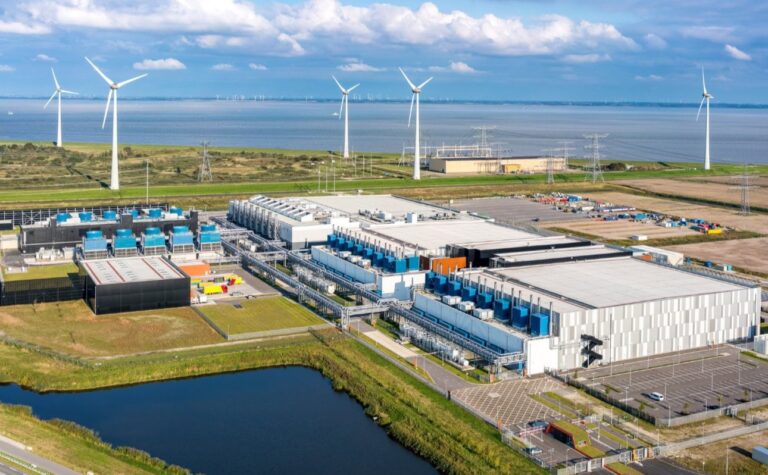
- Server facilities pull large amounts of electricity from local power grids, contributing to higher utility rates.
- Cooling operations consume millions of gallons of municipal fresh water.
- Automated generation tools expand web spam, straining content delivery networks and search platforms.
Industry analysts emphasize that addressing these tangible impacts requires enforcing existing data privacy regulations, auditing code deployment pipelines, and managing resource consumption rather than penalizing developers based on theoretical doomsday projections.