



Apple introduced an opt-in prompt in iOS 27 on Sept. 14 asking device owners for permission to collect Siri text and voice interactions to train its generative artificial intelligence foundation models.
Key points
- Apple introduced an opt-in setup prompt in iOS 27 requesting user text and voice data to train AI.
- Users can decline the data-sharing request without losing access to Siri AI features.
- Collected interactions connect to a rotating random device identifier instead of an Apple Account.
- Company documentation specifies that only Apple employees, not third-party contractors, review retained audio recordings.
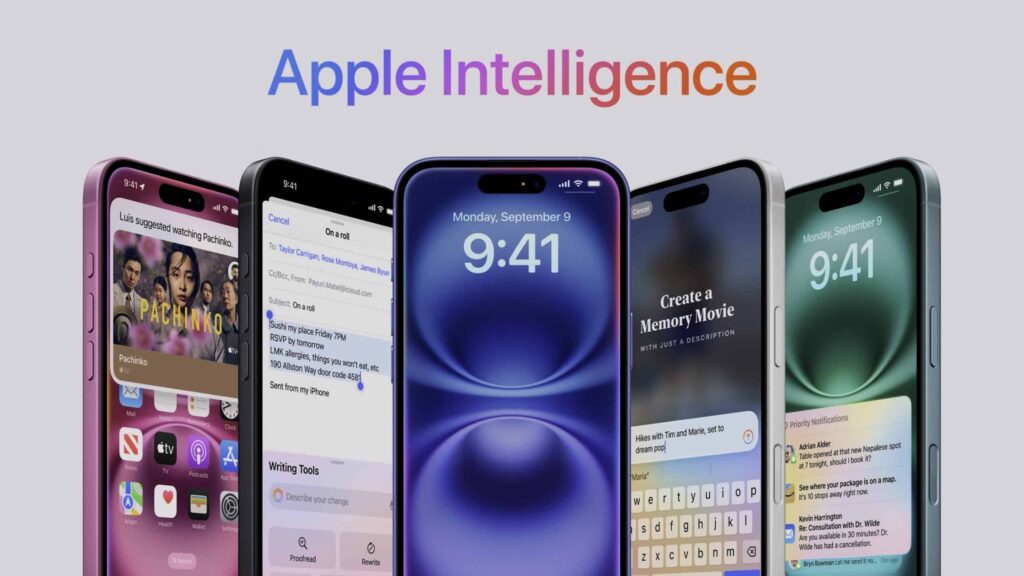
The policy update marks a shift from Apple’s historical approach to machine learning training, which relied primarily on synthetic data, web scraping, and Differential Privacy to avoid analyzing raw user prompts. The change allows Apple to analyze authentic human conversations as it works to improve Siri AI against competing models from OpenAI, Meta, and Anthropic.
Opt-In Prompt and Data Collection Controls
During the initial setup of iOS 27, users encounter a screen titled “Improve Siri & Apple Intelligence.” The prompt asks users to help improve foundation models by allowing Apple to store and review text and audio interactions from Siri, Dictation, and Translate.
The setup interface presents two choices: “Share Audio and Text” or “Not Now.” Choosing not to participate does not restrict access to Siri or other generative features on the device.
Users can also inspect or alter their data-sharing preference at any time. According to Apple support documentation, the control remains accessible through device settings:
- Open Settings
- Select Privacy & Security
- Tap Analytics & Improvements
- Toggle the Improve Siri & Apple Intelligence setting on or off
Device Identifiers and Human Audio Review
Apple states in its updated terms that collected data is not tied to a user’s Apple Account or email address. Instead, interactions associate with a random, rotating device identifier that resets periodically.
The policy outlines that collected samples may undergo human review to evaluate transcription accuracy and response quality. While questions emerged regarding whether outside contractors would handle the files, Apple’s privacy terms state that “Only Apple employees review audio recordings.” Non-audio interaction transcripts may be evaluated by separate data graders.
Apple takes steps to ensure that personal data is not stored or used by Apple.
Shift From Historical Model Training Methods
The revised data-collection stance comes after years of Apple promoting strict separation between user activity and model development. The company previously trained smaller on-device systems using Differential Privacy—a mathematical technique that injects random digital noise into data streams so individual patterns cannot be reconstructed—alongside web data gathered by its Applebot crawler.
In 2019, Apple faced criticism when reports revealed that third-party contractors regularly reviewed Siri voice recordings containing private conversations. Apple responded by suspending the evaluation program, terminating contractor listening agreements, and converting voice recording contributions into an opt-in feature.
The deployment of Siri AI in June 2026 transitioned the assistant from a single-command voice utility into a persistent conversational model. Complex multi-turn dialogues require diverse conversational examples to resolve ambiguous requests, prompting the company to seek real interaction data.
Audio Processing on Connected Devices
The updated privacy framework arrives as Apple expands ambient audio capabilities across its hardware ecosystem. The Apple Watch Series 12 and Apple Watch Ultra 4 include an Audio Intelligence suite featuring Live Rewind, which continuously buffers ambient speech and provides a transcript of the prior 15 seconds on request before discarding the audio.
Another feature, Siri Recap, summarizes conversations throughout the day using Apple’s Private Cloud Compute infrastructure. Apple has not stated whether ambient transcripts generated by watchOS hardware will eventually be incorporated into foundation model training datasets.