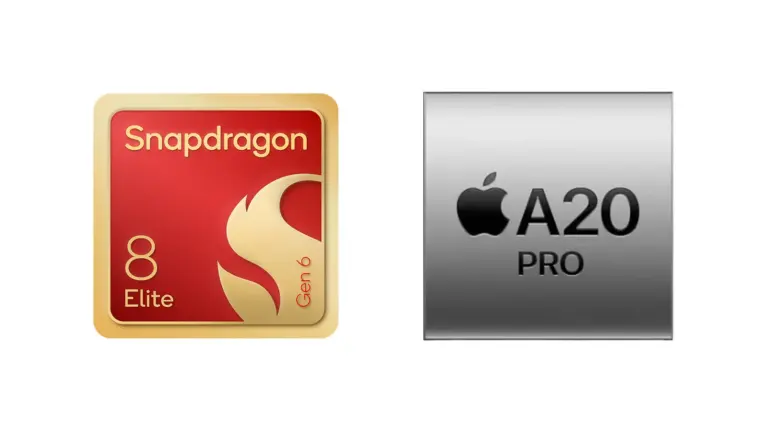
Qualcomm detailed on Wednesday the engineering considerations behind pushing its upcoming Snapdragon 8 Elite Gen 6 processor to 5GHz, marking the first time a mobile platform has reached that operating frequency.
Key points
- The Snapdragon 8 Elite Gen 6 is the first mobile system-on-chip to reach a 5GHz clock speed.
- Qualcomm designed the high clock target primarily for burst workloads, such as running complex on-device AI agents.
- A 5GHz clock cycle lasts 200 picoseconds, limiting electrical signal travel to roughly three centimeters across the silicon die.
- The frequency matches RF antenna designs that balance multi-gigabit wireless throughput with physical wall penetration.
While modern smartphones spend most operating hours running low-demand applications, higher clock frequencies dictate how quickly a device completes demanding tasks before returning to an idle state. Qualcomm is positioning the milestone as a key factor in mobile responsiveness as handset makers deploy more complex software features.
Burst Performance for On-Device AI Agents
Smartphone processors do not run at maximum frequency constantly because doing so would deplete battery capacity and generate excess heat. Instead, the 5GHz Orion CPU cores in the Snapdragon 8 Elite Gen 6 target short bursts of intense computational activity.
Qualcomm executive Chris Patrick compared the high frequency to automobile horsepower, noting that while standard driving requires little engine output, surplus power remains accessible for acceleration. In mobile devices, everyday actions such as browsing social media feeds consume modest processing power. However, complex background operations require immediate peak performance.
When you buy a car, you don’t need a ton of horsepower to get to the grocery store, but it is nice to have it and show off at a red light.
The company specifically identified local AI agents as a primary workload that benefits from the frequency jump. Running multi-step automated tasks directly on the phone demands low-latency data processing, and higher clock speeds allow the processor to finish calculations rapidly and switch back to lower power states.
The Physics of a 200-Picosecond Clock Cycle
Operating a mobile chip at 5GHz introduces significant microarchitecture challenges due to the physical behavior of electrical signals. At 5GHz, a single clock cycle lasts only 200 picoseconds, which is 200 trillionths of a second.
Within a 200-picosecond window, electrical signals can travel barely three centimeters across the silicon die. This constraint forces chip architects to carefully budget gate delays across deep execution pipelines to prevent timing errors, as communication across the chip approaches the physical limits of signal transmission speeds.
- Operating frequency: 5GHz maximum burst rate on custom Orion CPU cores.
- Clock cycle duration: 200 picoseconds per cycle.
- Signal travel limit: Approximately 3 centimeters per cycle across the die.
- Physical wavelength: Roughly 6 centimeters in free space.
Wireless Synergy and Silicon Architecture
Qualcomm also linked the 5GHz threshold to radio frequency engineering principles. A 5GHz wave has a physical wavelength of approximately six centimeters, which correlates with compact antenna designs inside mobile hardware.
In technical terms, 5 GHz is a fascinating sweet spot because its physical wavelength is roughly 6 cm and its clock cycle lasts just 200 picoseconds. In consumer silicon, that 200 ps window means electrical signals can travel barely 3 cm across a die, turning chip design into a direct fight against the speed of light where engineers must budget tiny gate delays across ultra
deep pipelines.
The company noted that a six-centimeter wavelength yields 1.5-centimeter quarter-wave antennas that fit standard smartphone logic boards. This spectrum range maintains wide channels capable of multi-gigabit data transfers while retaining the ability to pass through physical barriers like walls, avoiding the severe line-of-sight signal drops characteristic of millimeter-wave frequencies.