Qualcomm unveiled its Snapdragon 8 Elite Gen 6 processor on September 22, 2026, setting up a direct rivalry against Apple’s A20 Pro silicon across upcoming premium mobile devices.
Key points
- Both Qualcomm and Apple have shifted their flagship mobile silicon to TSMC's 2nm fabrication node.
- Qualcomm uses an eight-core Oryon CPU with no low-power efficiency cores, reaching clock speeds up to 5.0 GHz.
- Apple pairs two 4.93 GHz performance cores with four efficiency cores, alongside a 32-core Neural Engine.
- Qualcomm integrates the Snapdragon X105 modem with 3GPP Release 19 support and Wi-Fi 8, while Apple uses its in-house C2 modem.
Both flagship system-on-chips are manufactured on TSMC’s 2nm semiconductor node, joining the MediaTek Dimensity 9600 Pro in adopting the manufacturing standard. The processors approach performance differently, contrasting Qualcomm’s custom Oryon all-big-core CPU layout with Apple’s hybrid efficiency architecture.
CPU Architecture and Compute Throughput
Qualcomm’s Oryon CPU abandons traditional small efficiency cores entirely, a design strategy continued from earlier generations. The cluster features two Prime cores operating up to 5.0 GHz alongside six Performance cores running up to 4.0 GHz, backed by 16 MB of Oryon Flex Cache. This structure delivers heavy multi-threaded processing power for continuous operations like local code compilation and multi-stream background execution.
Apple maintains a 2+4 core configuration on the A20 Pro, which powers the iPhone 18 Pro and Pro Max. It pairs two performance cores clocking at 4.93 GHz with four high-efficiency cores. While Qualcomm holds an advantage in sustained multi-core tasks through core count density, Apple retains an edge in single-core instructions per cycle and low-draw power states during routine idle use.
| Feature | Snapdragon 8 Elite Gen 6 | Apple A20 Pro |
|---|---|---|
| Fabrication Node | TSMC 2nm | TSMC 2nm |
| CPU Layout | 2 Prime + 6 Performance | 2 Performance + 4 Efficiency |
| Peak CPU Frequency | 5.0 GHz | 4.93 GHz |
| GPU Architecture | Adreno (Unreal Engine 5 features) | 7-core Apple GPU |
| Cellular Modem | Snapdragon X105 (3GPP Rel. 19) | Apple C2 Modem |
| Local Wireless | Wi-Fi 8, Bluetooth 6.0 | Wi-Fi 7, Bluetooth 5.4 |
Graphics Rendering and Sustained Gaming
Both chipsets feature significant improvements in graphics processing. Qualcomm reports a 35% gain in graphics compute and a 40% reduction in power consumption for its updated GPU. The hardware includes native integration for Unreal Engine 5 technologies like Lumen global illumination and Nanite geometry systems, alongside Vulkan 1.4 and Game Quick Touch 3.0 support.
Apple’s A20 Pro introduces an updated 7-core GPU architecture that provides up to 40% higher graphics speed than the A19 Pro. The design incorporates a 50% increase in unified memory bandwidth and links directly to chassis vapor-chamber cooling arrays. While Qualcomm delivers higher burst framerates, Apple’s direct thermal layout prioritizes stable frame delivery during lengthy console port sessions.
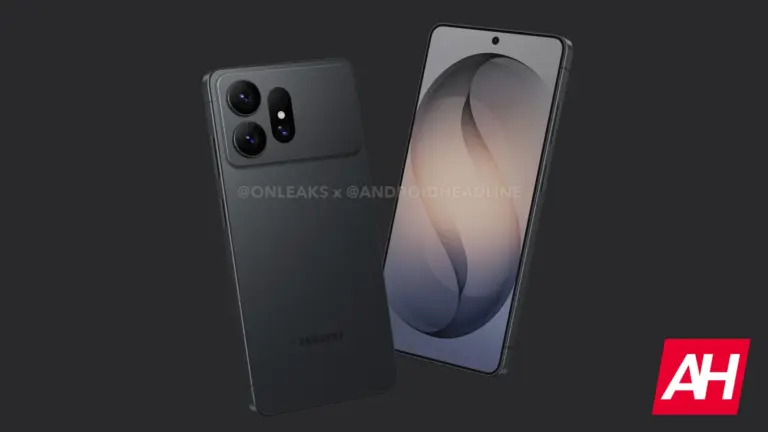
Upcoming Android devices, including hardware previews like the Snapdragon 8 Elite flagship from Motorola, demonstrate how manufacturers are tailoring system cooling around Qualcomm’s peak rendering targets.
Neural Engine and Contextual Processing
Machine learning workloads reflect different engineering priorities. Qualcomm’s Hexagon NPU adopts an asynchronous layout with an Element Accelerator, 12 scalar units, 8 vector units, and a dedicated tensor unit. The subsystem achieves 20% higher performance per watt and supports quantization down to INT2 and FP8 data types.
Qualcomm balances this high-load block with its Sensing Hub, which incorporates dual micro-NPUs and always-on image signal processors to maintain local personal knowledge graphs. The design serves proactive background tasks without waking power-hungry execution units, aligning with Qualcomm’s push for the Snapdragon 8 Elite Gen platform to handle automated personal assistants.
Apple relies on scale for machine intelligence. The A20 Pro doubles its Neural Engine footprint into a dual 16-core configuration, totaling 32 cores. This provides twice the processing throughput of the previous generation, serving Siri contextual lookups, on-device large language models, and computational camera features.
Wireless Connectivity and Market Availability
Qualcomm maintains a technical lead in cellular and local wireless specifications. The integrated Snapdragon X105 Modem-RF supports 3GPP Release 19 for 5G Advanced networks, reaching theoretical download speeds up to 14.8 Gbps through 6-antenna reception and native satellite communication. The FastConnect 8800 subsystem adds Wi-Fi 8 support with peak data rates of 11.6 Gbps.
Apple equips the A20 Pro with its second-generation in-house C2 modem. The integrated design reduces power draw compared to legacy external cellular parts but remains within Wi-Fi 7 and standard 5G Advanced specifications without matching Qualcomm’s 6Rx edge reception.
The competition also extends across hardware partners. While the A20 Pro remains restricted to Apple hardware, Qualcomm offers the base processor alongside the higher-tier Snapdragon 8 Elite variant to various Android manufacturers throughout late 2026 and 2027.