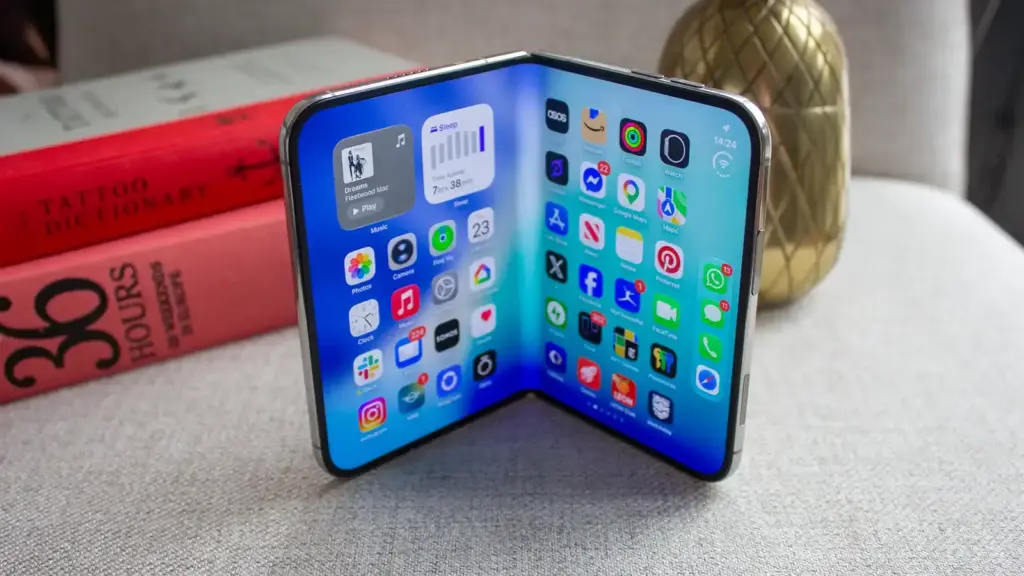
Apple’s first foldable phone, the iPhone Duo, went on sale October 23 at a starting price of $1,999, arriving roughly seven years after Samsung introduced the folding phone category. The device pairs a 5.4-inch outer screen with a 7.6-inch inner display and runs the same A20 Pro chip found in the iPhone 18 Pro.
Key points
- The iPhone Duo launched October 23 at a starting price of $1,999, the highest of any iPhone.
- It pairs a 5.4-inch outer OLED with a 7.6-inch inner OLED, both running at 120Hz.
- Apple swapped Face ID for Touch ID built into the power button and dropped the Action Button.
- The titanium hinge uses more than 100 components and lets the phone fold flat at 180 degrees.
- The Duo runs on Apple's A20 Pro chip and carries an IP68 rating for dust and water resistance.
The launch matters because it signals Apple is finally competing directly with Samsung’s Galaxy Z Fold 8 and Google’s Pixel 11 Pro Fold in a segment both companies have refined for years. Apple unveiled the iPhone Duo during its Surprise and Shine event on September 9, and the $1,999 starting price places it above every other model in Apple’s lineup, including the iPhone 18 Pro Max and iPhone Air.
Titanium Build and a Hinge With More Than 100 Parts
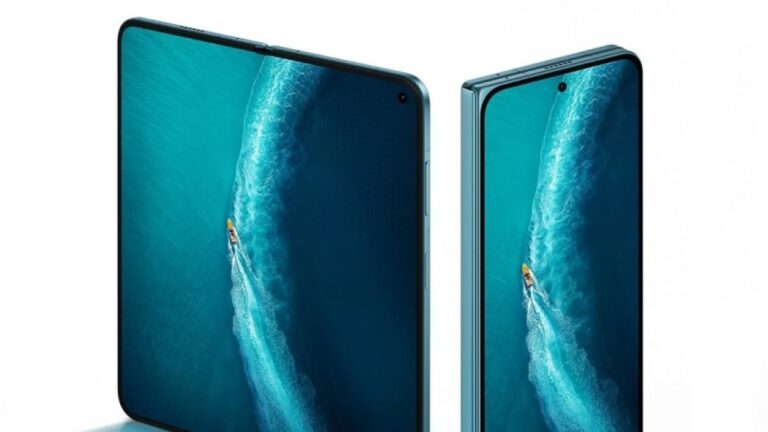
The Duo’s frame is 5.2mm thick when open, thinner than the iPhone Air’s 5.6mm, and built from titanium with a polished finish that contrasts against a textured hinge cover. Apple says the hinge contains more than 100 individual components and uses a variable torque system that adjusts resistance as the phone opens and closes, letting it hold almost any angle from folded to a flat 180 degrees.
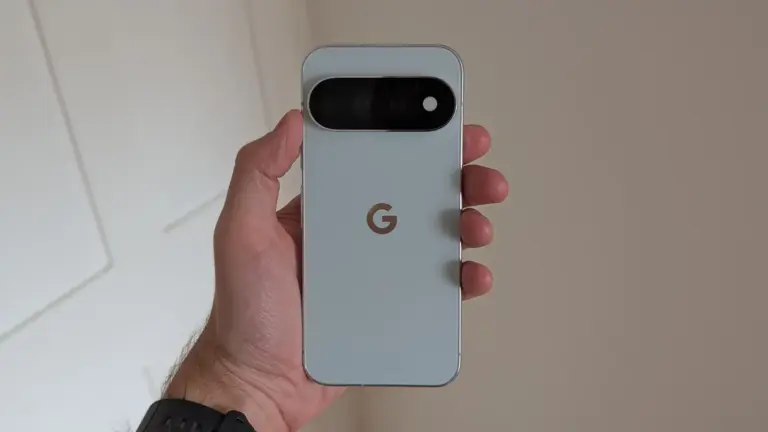
Folded, the device measures 117.8mm tall and 84.1mm wide, making it 45.6mm shorter than the iPhone 18 Pro Max but only 6.1mm wider. It comes in two finishes, Night Sky and Star White, and weighs 254g. The phone carries an IP68 rating for dust and water resistance, a rarity among foldables that puts it on par with the Pixel 11 Pro Fold and ahead of the Galaxy Z Fold 8’s IP48 rating.
One tradeoff stands out immediately: Apple replaced Face ID with Touch ID built into the power button, the same setup used on the iPad and iPad Air. It works reliably but requires a deliberate press rather than the automatic unlock iPhone owners are used to. The Action Button is also missing, and volume keys have moved to the top edge. The Duo is eSIM-only, with no physical SIM tray.
A Matt Inner Screen That Tackles the Crease Problem
Both displays are 120Hz OLED panels with ProMotion and Always-On support, reaching peak brightness of 3,000 nits outdoors. The outer 5.4-inch screen shares its aspect ratio with the inner display, which Apple says offers 90 percent of the iPhone 18 Pro’s screen area, so apps behave consistently whether the phone is open or closed.
The inner 7.6-inch panel, roughly 50 percent larger than the iPhone 18 Pro Max’s screen, uses a nano-textured matt finish instead of the glossy coating found on rival foldables. That texture diffuses reflections, feels smoother to the touch, and makes the crease largely invisible during normal use, though a faint groove is detectable when dragging a finger across the center. The tradeoff is reduced contrast on dark content, with night scenes in video looking less deep than on a glossy OLED, and visibility suffers somewhat near bright windows.
A20 Pro Performance and Early Durability Testing
The Duo runs Apple’s A20 Pro chip, its first built on a 2nm process, paired with a vapor chamber and a flexible graphite layer that spreads heat across both halves of the device when open. Day-to-day performance has been fast and consistent in early testing, with no signs of slowdown under typical use.
Durability testing from other reviewers has turned up an unusual result. After putting the hinge through 32,000 folds with a strain gauge, testing found the mechanism actually grew stiffer rather than looser over time, the opposite of what’s typically expected from folding hardware, though the change wasn’t noticeable during regular handling.