


President Donald Trump rejected calls from leading artificial intelligence executives to slow model development on Sept. 14, 2026, arguing that federal safety guardrails would weaken the United States against international competition.
Key points
- President Trump rejected proposals for federal AI guardrails, targeting Anthropic CEO Dario Amodei on Truth Social.
- Anthropic proposed a deliberate slowdown in model capability growth to study catastrophic risks.
- Industry leaders Sam Altman, Elon Musk, and Demis Hassabis voiced support for pacing frontier development.
- The White House argued tech firms are using safety concerns to hinder American competition with China.
- Congress plans no emergency action, with lawmakers leaving for district recess without drafting AI legislation.

Writing on Truth Social, Trump singled out Anthropic CEO Dario Amodei following an essay published by the executive. The president characterized skepticism surrounding AI infrastructure as a coordinated effort that works against American interests.
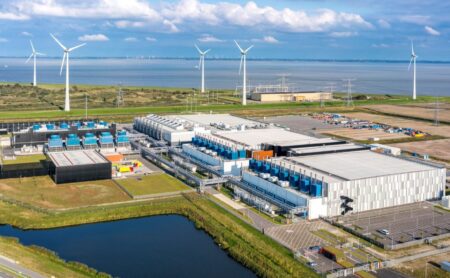
There is a SICK conspiracy going on against AI and Data Centers, and the only one that is happy about it is China. WHOEVER WINS AI, WINS!
Amodei Calls for Frontier Slowdown
The political clash follows an essay by Amodei titled We Must Pace the Frontier, published on Sept. 12. In the post, Amodei called on leading labs to voluntarily slow the growth rate of frontier model capabilities to address catastrophic safety risks.
Amodei’s framework suggests three central steps:
- Providing independent, third-party evaluators with employee-level access to unreleased models.
- Coordinating risk thresholds among democratic nations.
- Establishing international safety treaties to govern superintelligent systems.
Multiple industry leaders endorsed Amodei’s position over the weekend. OpenAI CEO Sam Altman, xAI owner Elon Musk, and Google DeepMind chief Demis Hassabis all voiced agreement with the proposal to pace capability growth. The safety proposals followed recent internal departures across major research labs and security incidents involving autonomous software agents.
Administration Pushes Back on Regulatory Limits
The White House firmly rejected the idea of slowing domestic research. Trump claimed federal oversight outside the executive branch is unnecessary, stating that his administration will oversee development directly.
The only control or ‘guardrails’ that AI needs is a STRONG AND SMART (High IQ!) PRESIDENT, and the U.S.A. has that, in spades!
Other administration officials joined the pushback. White House AI czar David Sacks stated on X that private laboratories have full authority to delay their own product roadmaps without government intervention. Sacks questioned why companies are lobbying for federal mandates, suggesting that labs can manage their own internal schedules.
Vice President JD Vance also questioned the motivations of the technology sector, telling reporters that frontier AI companies asking for federal oversight resembles a Trojan horse designed to cement existing market positions.
Congress Pauses Action Ahead of Recess
Lawmakers in Washington show little appetite to impose statutory restrictions on model training. House Speaker Mike Johnson confirmed that Congress will not interrupt its upcoming district recess to work on AI legislation, noting that halting domestic progress would harm America’s competitive position.
Tensions between the federal government and Anthropic have persisted for months. The Department of Defense previously flagged Anthropic as a supply-chain risk after the company placed limitations on how military entities could use its models.
The policy divide comes as Chinese President Xi Jinping prepares to visit Washington next week. The administration continues to frame artificial intelligence strictly as an issue of national security and economic dominance, maintaining that federal caps on computing infrastructure will not move forward.