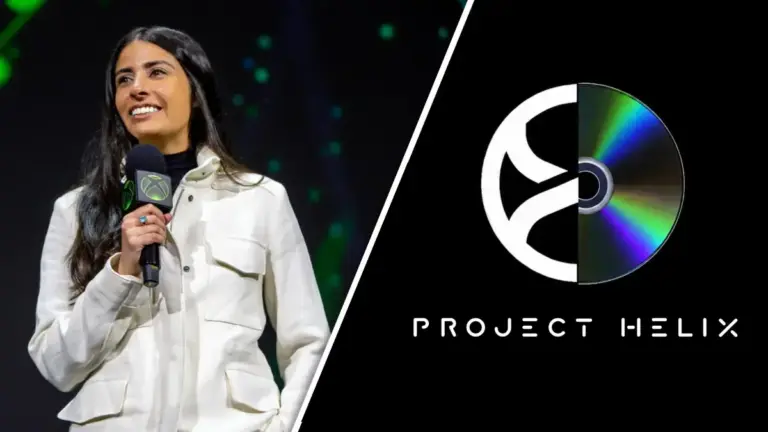
Microsoft says its next-generation Xbox, codenamed Project Helix, will remain a traditional console at heart, even though it will be able to run PC games. Xbox Vice President of Next Generation Jason Ronald made the clarification in the Xbox 25th Anniversary Magazine, published November 15.
Key points
- Jason Ronald says Project Helix is a console capable of playing PC games, not a PC that plays console games.
- The statement appears in the Xbox 25th Anniversary Magazine, released November 15, 2026.
- Project Helix uses a custom AMD SoC with FSR Next technology for ray tracing and efficiency gains.
- Microsoft plans backward compatibility across four generations of Xbox hardware and a unified interface.
- Alpha hardware is expected to reach developers in 2027, with no price or release date confirmed.
The distinction matters because it sets expectations for how Helix will work once it reaches players. Ronald wrote that the console’s identity will stay grounded in the simplicity Xbox owners expect, even as the hardware gains PC-level flexibility.
Why Microsoft Is Drawing a Line Between Console and PC
“Helix is designed to be a console capable of playing games from your PC,” Ronald said. “It is not a PC that can also play console games.” The framing is meant to reassure players that Helix won’t saddle them with operating system updates, driver installs or the kind of configuration work common on gaming PCs.
Ronald said Microsoft wants games to launch instantly on Helix, the same way they do on current Xbox consoles, while still giving advanced users the option to adjust settings and performance when they want more control. That balance between simplicity and flexibility has shaped much of the hardware’s design process, according to the magazine.
How the Xbox Ally Handheld Shaped Project Helix
Microsoft’s work on the ROG Xbox Ally handheld has directly informed Helix’s development, Ronald said. Player feedback on the handheld’s Xbox Mode interface and its unified game library pushed the team toward building Helix’s own dedicated interface rather than reusing the existing Windows-based Xbox Mode experience.
That unified approach extends beyond the handheld. Microsoft wants a consistent Xbox interface across consoles, PCs, handhelds and TVs, so players can move between devices without losing track of their libraries or progress. Backward compatibility plays into that goal directly, with Microsoft aiming to let Helix run games from four generations of Xbox consoles, according to the Xbox 25th Anniversary Magazine.
Custom AMD Chip and Neural Rendering Push Visual Fidelity
Project Helix is built around a custom AMD system-on-chip, a single processor combining the CPU and GPU functions, paired with AMD’s FSR Next upscaling technology. Microsoft says the combination is meant to deliver a notable jump in ray tracing performance along with better efficiency and tighter integration between graphics and compute workloads.
Rather than chase raw numbers like 8K resolution or 240Hz refresh rates, Ronald said the focus for the next generation is deeper immersion and new gameplay experiences. Microsoft is exploring neural rendering, a technique that uses machine learning to improve image quality without the heavy processing cost of traditional rendering, as one path toward that goal.
Development Process Involves Studios and Prototyping Labs
Microsoft has consulted its first-party studios since the earliest stages of Helix’s development, asking developers what creative ambitions and technical limitations they wanted new hardware to address. The company is also using its Human Factors Lab to study controller ergonomics and accessibility, and its Advanced Prototyping Center, which relies on CNC machines and industrial 3D printers, to test hardware designs.
Component costs remain a complication. Ronald acknowledged that rising prices for parts like RAM are making gaming hardware more expensive across the industry, forcing Microsoft to weigh technical upgrades against affordability. A report last month suggested Xbox Project Helix could cost as much as $1,800 at launch, though Microsoft has not confirmed a price, and the anniversary magazine does not mention one either.
Microsoft has not said whether Helix will support third-party PC storefronts such as Valve’s Steam, and the exact mechanics of how PC games will install and run on the console remain unexplained. The company also hasn’t confirmed whether Helix will include a disc drive. Financial pressure on the broader Xbox business adds another layer of uncertainty, with one analyst previously suggesting political shifts in Washington could push Microsoft to consider selling off its Xbox division to fund AI investments.
Alpha hardware is expected to reach developers sometime in 2027, giving Microsoft roughly a year to refine the console before outsiders get hands-on access. No official release date or final launch lineup has been announced.